
Tile Roof Underlayment Types
The code lists the underlayment products allowed under clay and concrete tile. Each is a real choice with its own trade-offs, so the estimate should say which one you're getting.
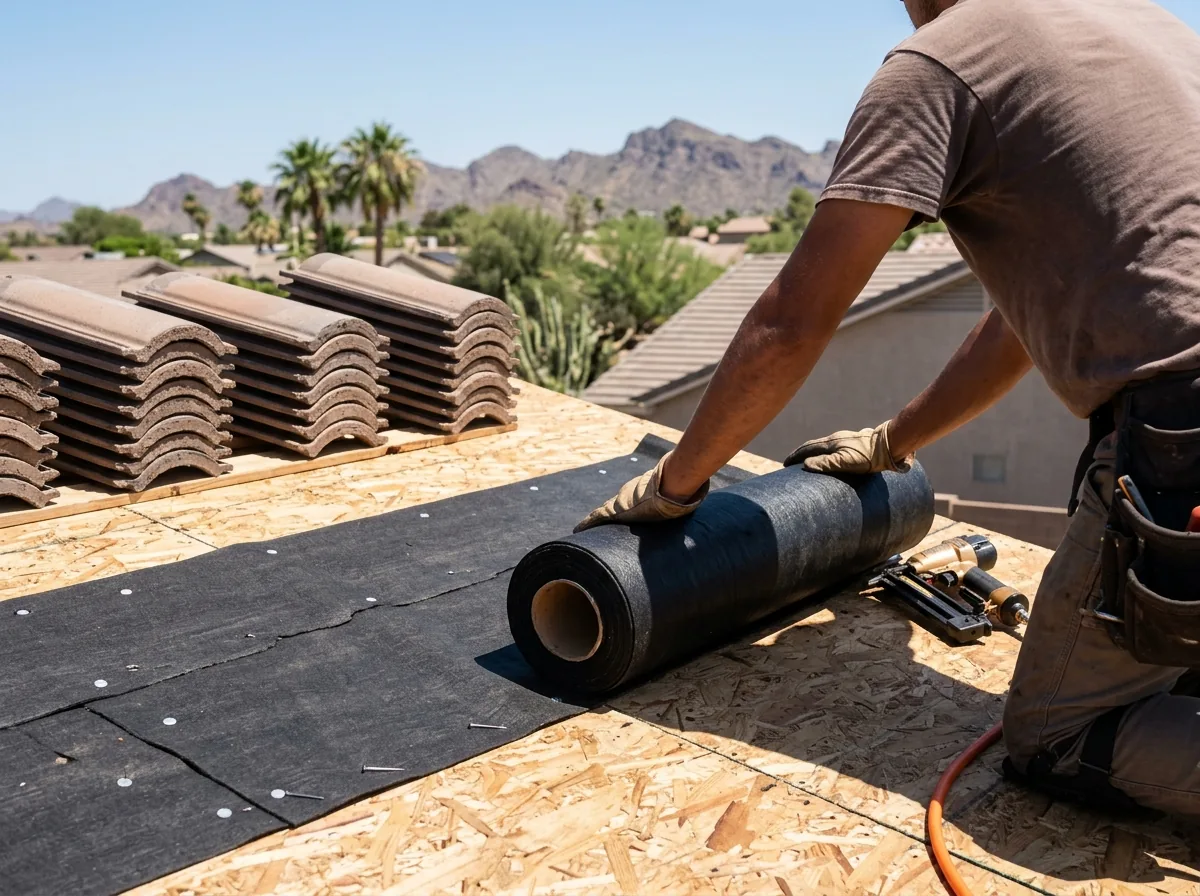
Felt Underlayment (ASTM D226 Type II)
Asphalt-saturated organic felt is the traditional underlayment under tile. It's mechanically fastened to the deck and lapped so each course sheds water onto the one below. Under tile it has to meet ASTM D226 Type II.
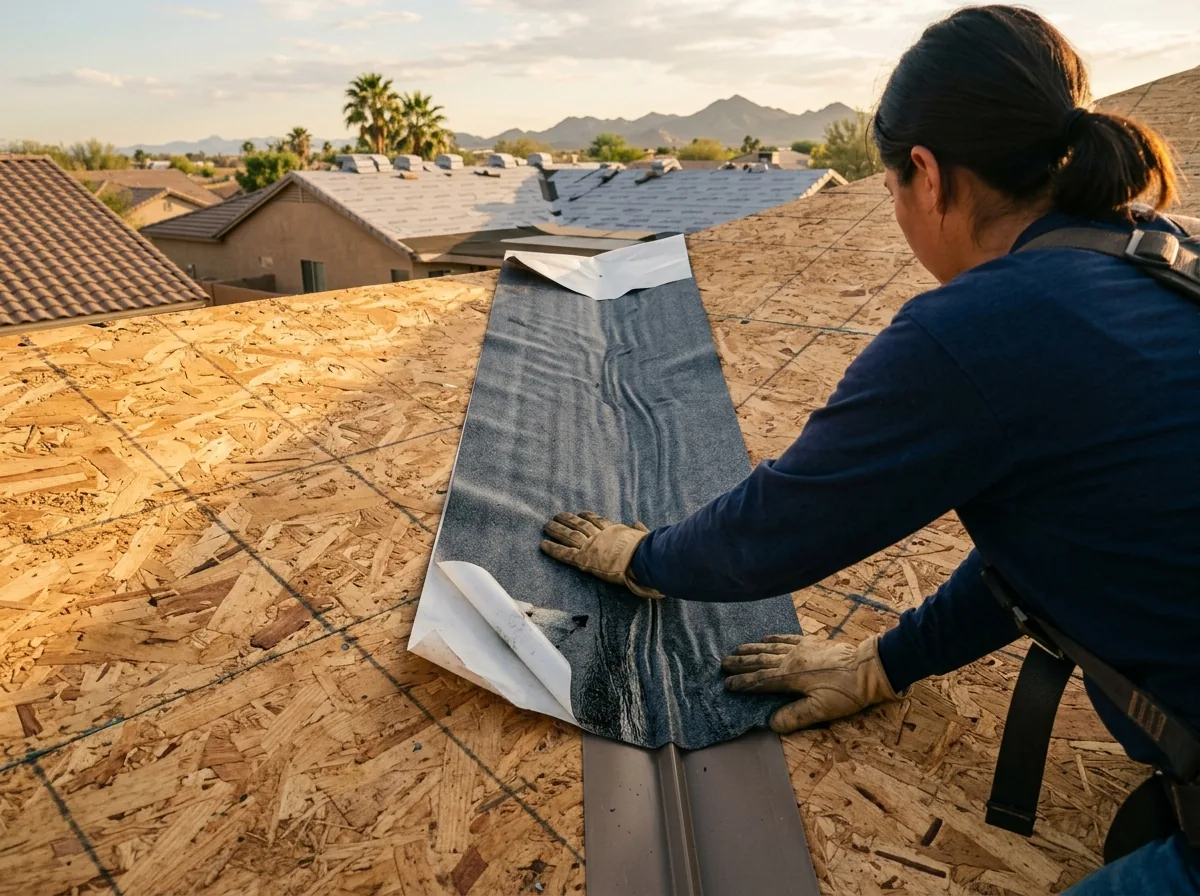
Self-Adhered Underlayment (ASTM D1970)
Self-adhering polymer-modified bitumen sheet sticks to the deck instead of relying only on fasteners, and it seals around the nails that go through it. Some roofs use it only in valleys and along walls, with another product on the rest of the deck.
Synthetic and Mineral-Surfaced Underlayment
Synthetic polymeric underlayment is covered by ASTM D8257, first published in December 2020. It's lighter than felt per roll. Felt base sheet (ASTM D2626) and mineral-surfaced roll roofing (ASTM D6380 Class M) are also allowed under tile. Whichever product is chosen, the tile manufacturer's installation instructions should list it as compatible.
Two Layers on Low-Slope Tile
Clay and concrete tile can go on slopes of 2½:12 or steeper. Between 2½:12 and 4:12, the code requires two layers of underlayment. If part of your roof is a low-pitched patio or porch section, check its slope before comparing single-layer and double-layer quotes.
Why Tempe homeowners call Tempe Expert Roofing
- Free, no-obligation roof estimates
- Written scope: tear-off, underlayment, flashing, coating
- Photos of every finding on your roof
- Permit and code questions answered up front
- One call, one local roofer
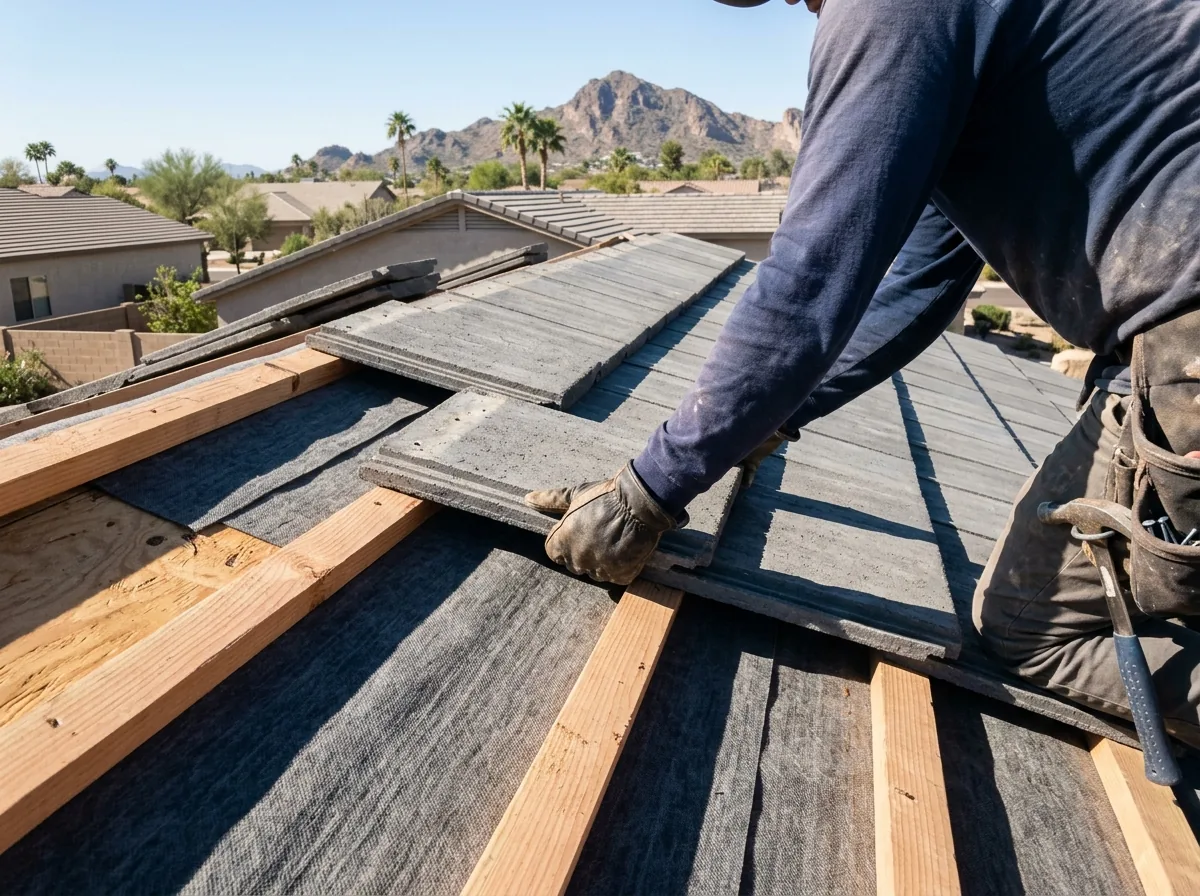
How a Lift-and-Relay Works
- 1
Lift and stack
Tiles come off and are stacked on the roof, sorted so broken and cracked ones can be set aside. - 2
Strip
The old underlayment and battens are torn off down to the deck, and soft or damaged sheathing is replaced. - 3
Underlay
New underlayment goes down in the layers the slope requires, with self-adhered sheet in valleys where the roofer uses it. - 4
Flash
New valley metal, at least No. 26 gauge and 11 inches each way from the centerline with a splash diverter rib, plus new flashing and counterflashing at walls, pipes and vents. - 5
Batten and relay
New battens, then the sound tile goes back, with matching replacements for the broken pieces. Perimeter tiles always get a fastener.
How to Compare Underlayment Replacement Quotes
Product
The brand and its ASTM standard (D226 Type II felt, D1970 self-adhered, D8257 synthetic, or another listed type).Layers
One or two, and whether your slope requires two.Valleys
Self-adhered sheet, new metal, or both. Valley metal has to be at least No. 26 gauge and 11 inches each way from the centerline.Battens
New or reused.Flashing
New at walls, pipes, vents and edges.Tile breakage
How broken tiles will be replaced and matched, and whether spare tiles are included.Deck repair
The price per sheet if soft sheathing turns up.Permit
Tempe exempts a replacement roof covering, but replacing any other roof assembly component needs a permit. Ask the roofer, or the Tempe Permit Center at 480-350-4311, whether your underlayment job needs one.
Signs the Underlayment Is Done
- Leaks with no broken tile anywhere near them.
- Underlayment that crumbles or cracks where a tile has slipped and exposed it.
- Water stains on the deck or rafters seen from the attic.
- Repeated tile repairs in different spots, each one followed by another leak somewhere else.
A roofer can confirm this by lifting a few tiles in different areas. Ask for photos of what's under them.