
Foam Roof Repair Services
A foam roof is one continuous layer, so damage in one spot can be cut out and rebuilt without touching the rest. What matters is catching it before water gets into the foam around it.
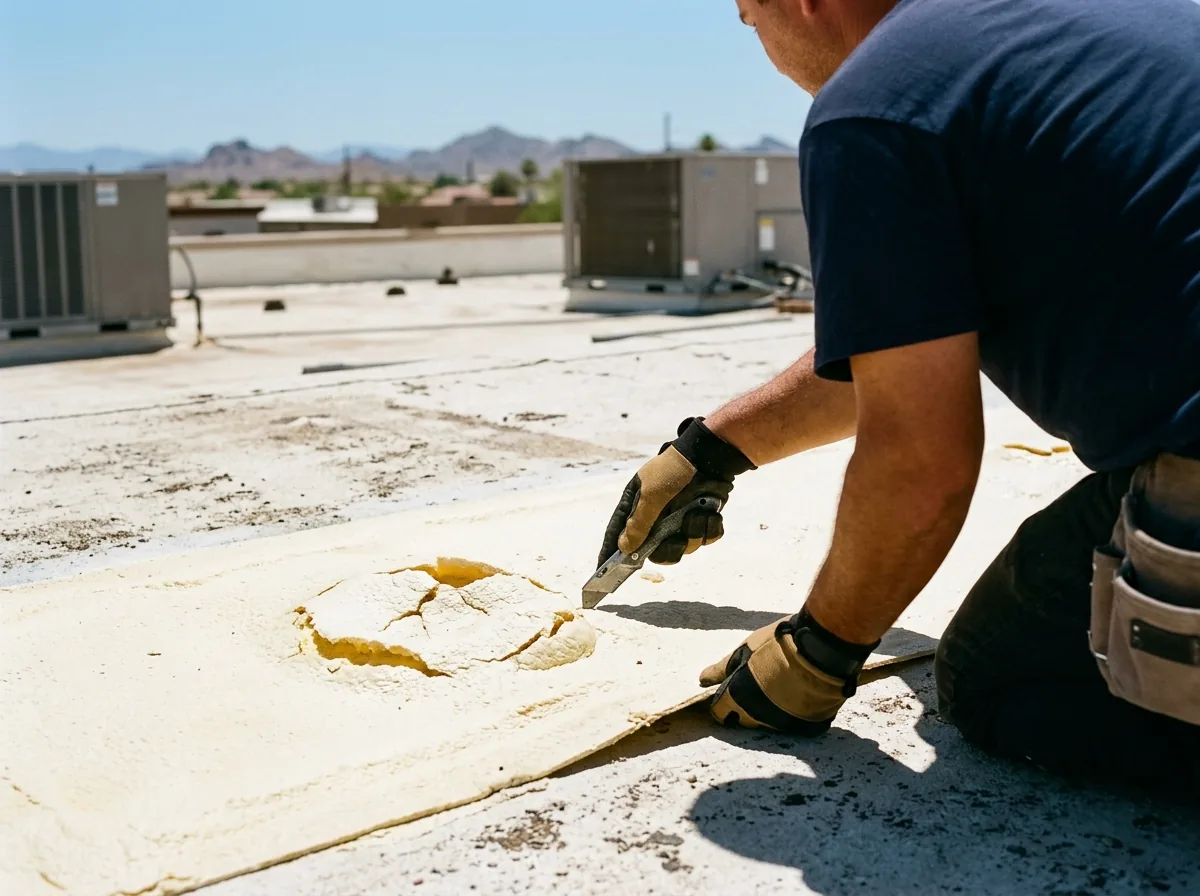
Blister and Puncture Repair
Blisters are pockets where the foam or coating has lifted, and punctures come from dropped tools, foot traffic or debris. The repair cuts the damaged foam back to solid, dry material, fills the hole with new foam or a compatible sealant, and coats it to match the surrounding roof. Wet foam around a puncture has to come out too, or the patch won't hold.
Bird Damage Repair
Birds peck at foam once the coating is worn or cracked, leaving small holes and exposed foam. Repairs clean out the damaged spots, fill them and recoat. Bird damage in many places is a sign to check the whole coating, not just the holes.
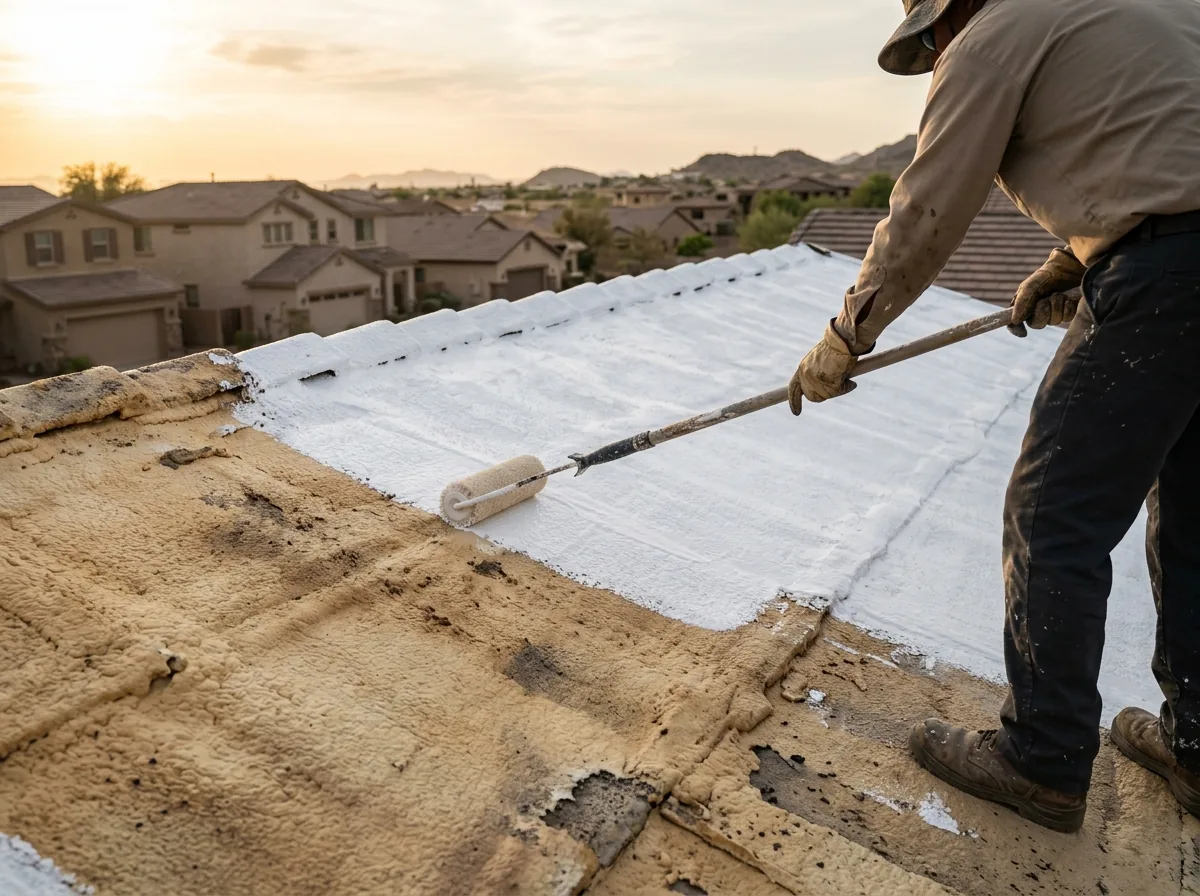
Recoating Worn Foam
The coating protects the foam from sunlight. Once it wears thin, the foam surface starts to break down. The code allows a new coating over an existing coating or foam roof without a tear-off, provided the roof isn't water-soaked or deteriorated. A recoat means washing the roof, cutting out and patching damaged foam, priming where the manufacturer calls for it, and applying acrylic (ASTM D6083), silicone (ASTM D6694) or moisture-cured polyurethane (ASTM D6947) coating to the specified thickness. See roof coating.
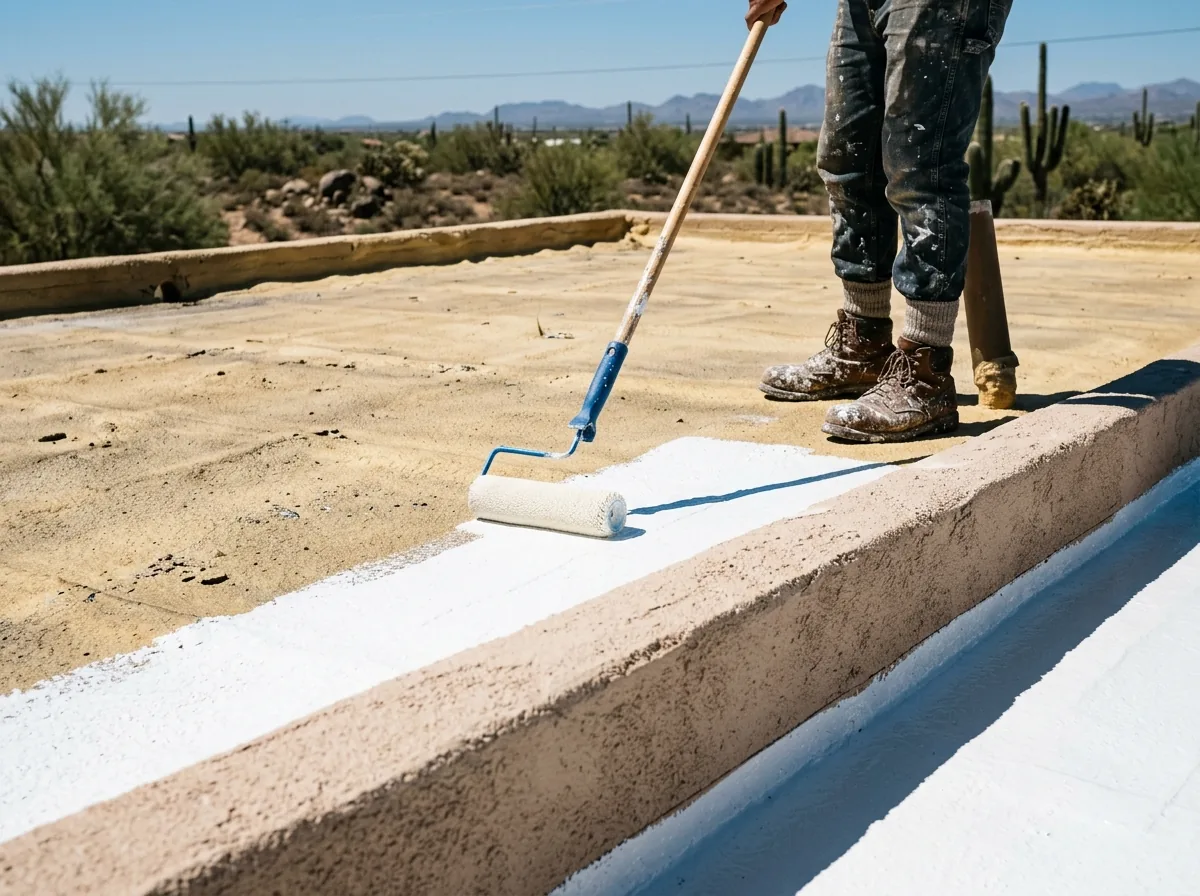
Parapet and Scupper Edges
Where a foam roof ends at a stucco parapet, water drains out through scuppers. The joints where foam meets the parapet cap, the wall and the scupper join different materials, and a cracked seal there lets water behind the foam. Unless a roof sheds water over its edges, the code requires a drain at each low point, so a blocked or cracked scupper is a repair priority.
Why Tempe homeowners call Tempe Expert Roofing
- Free, no-obligation roof estimates
- Written scope: tear-off, underlayment, flashing, coating
- Photos of every finding on your roof
- Permit and code questions answered up front
- One call, one local roofer
What Affects the Cost of a Foam Roof Repair
- How many damaged spots there are, and how big.
- Whether water has gotten into the foam around them.
- Whether the job is spot repairs or a full recoat.
- The coating product and the thickness it needs.
- Parapet, scupper and equipment details.
Signs a Foam Roof Needs Repair
- Bare tan or orange foam showing through the coating.
- Blisters, soft spots or small holes, especially near where people walk.
- Water that sits for days after rain instead of draining off.
- Cracks where the foam meets parapet walls, scuppers, pipes or AC stands.
- Stains on ceilings under the flat section.
A roofer can core a small sample to check whether moisture has gotten into the foam. That test is what separates a repair and recoat from a replacement. For a new system or a full replacement, see foam roofing.