
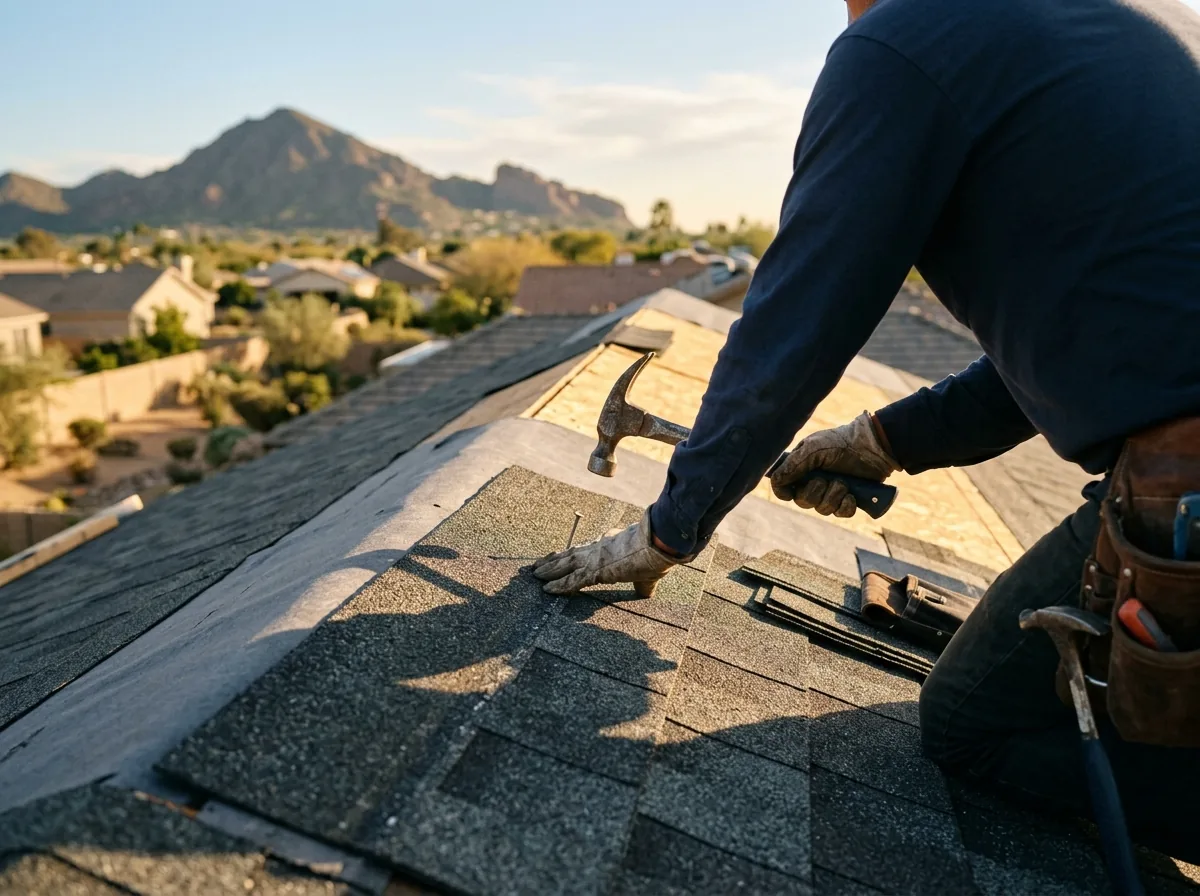
Residential Roofing Services in Tempe
Plenty of Tempe houses have two roofs on one building: pitched concrete tile over the main rooms and a flat foam section behind a parapet over a patio or an addition. Each fails in its own way, and the building code treats each differently, so the services below are split by roof type. Tempe now enforces the 2024 International Residential Code, and the code sections quoted here come from that edition.
Roof Replacement
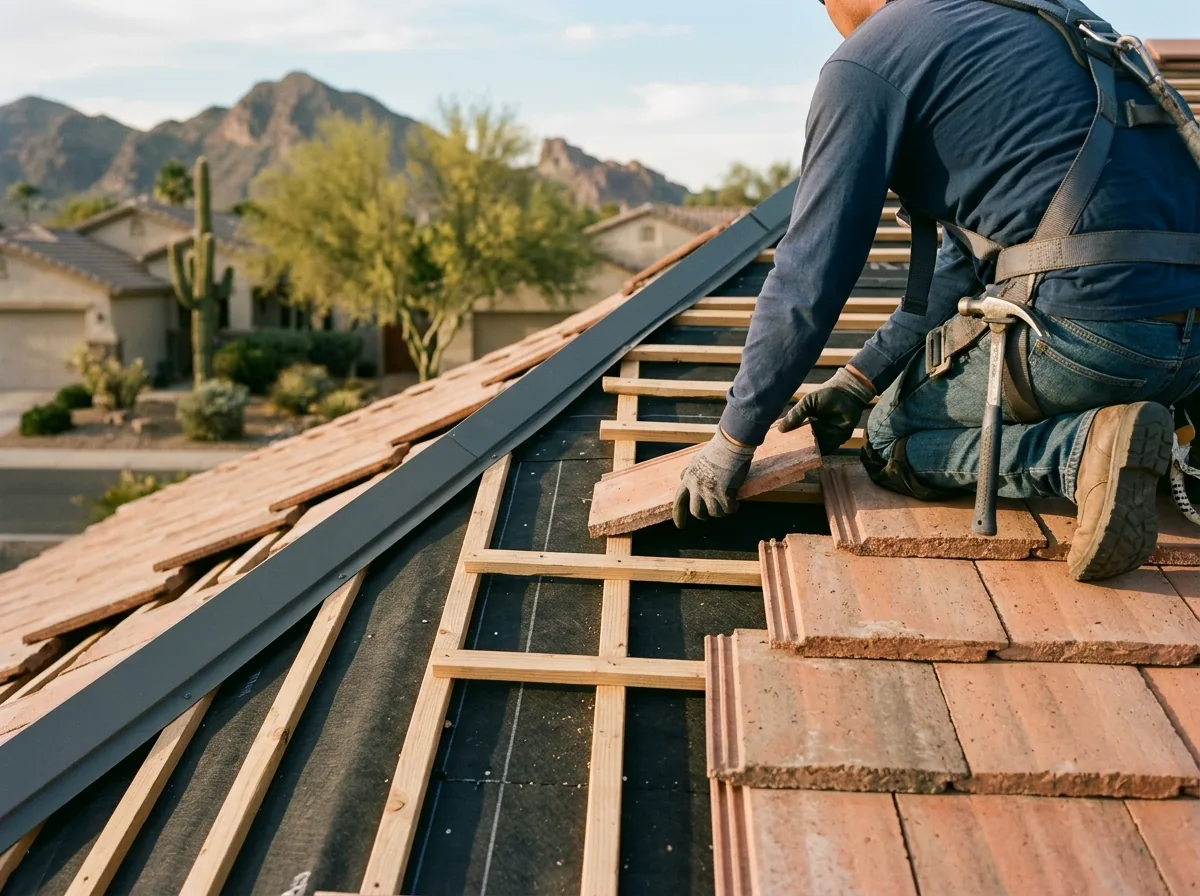
A full roof replacement removes every existing layer down to the roof deck, which the code requires for a replacement. With the deck bare, the roofer can find soft or delaminated sheathing and replace it before new underlayment, drip edge, wall and penetration flashings, and the new covering go on.
Whether you need a permit depends on what changes. Tempe exempts a replacement roof covering from a building permit when the new covering's classification is equal to or better than the old one and it doesn't load the framing beyond its design capacity. Replacing sheathing, or any other part of the roof assembly, does need a permit. Going from shingle to tile adds weight, and that is the case the rule is written for, so it gets checked.
Tile Roof Underlayment Replacement
Think of the tile as a sunshade and the underlayment beneath it as the raincoat. When the underlayment dries out and cracks, a roof with good-looking tile can still leak.
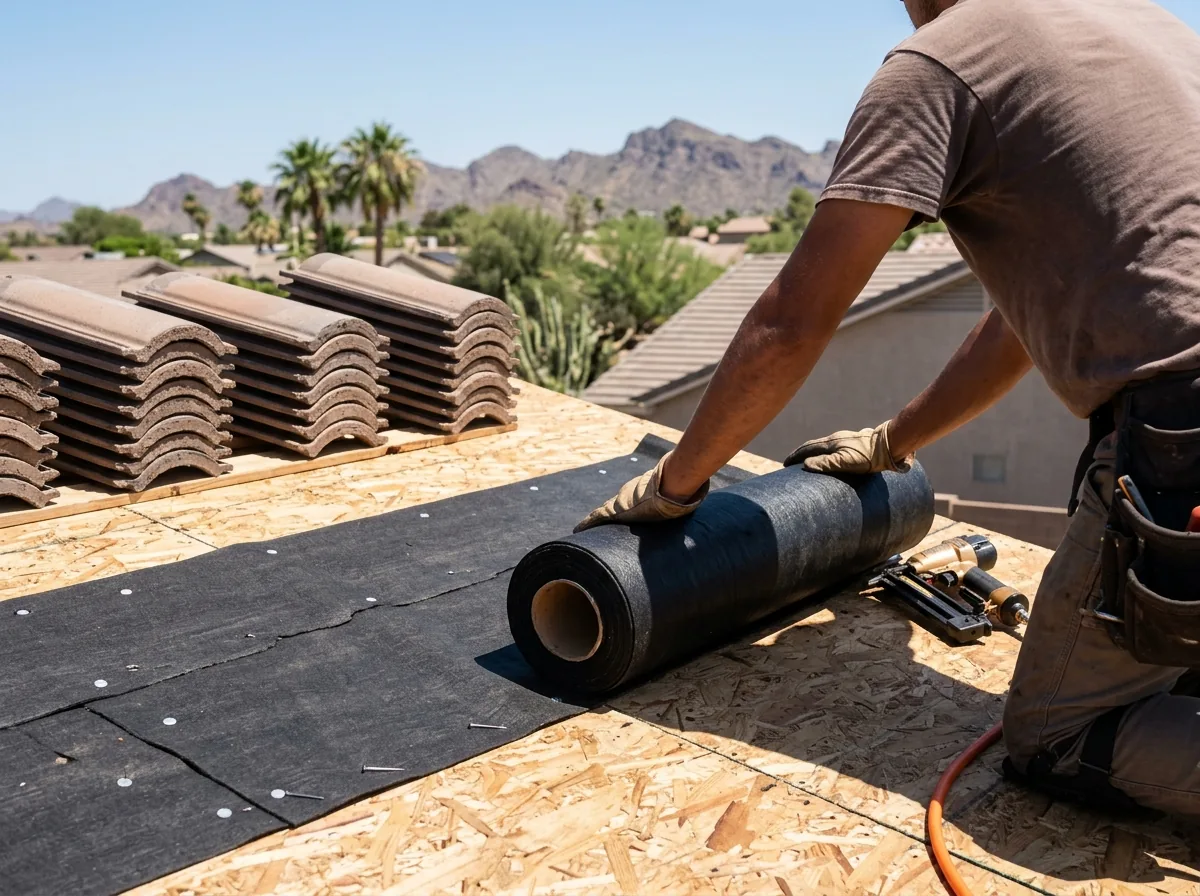
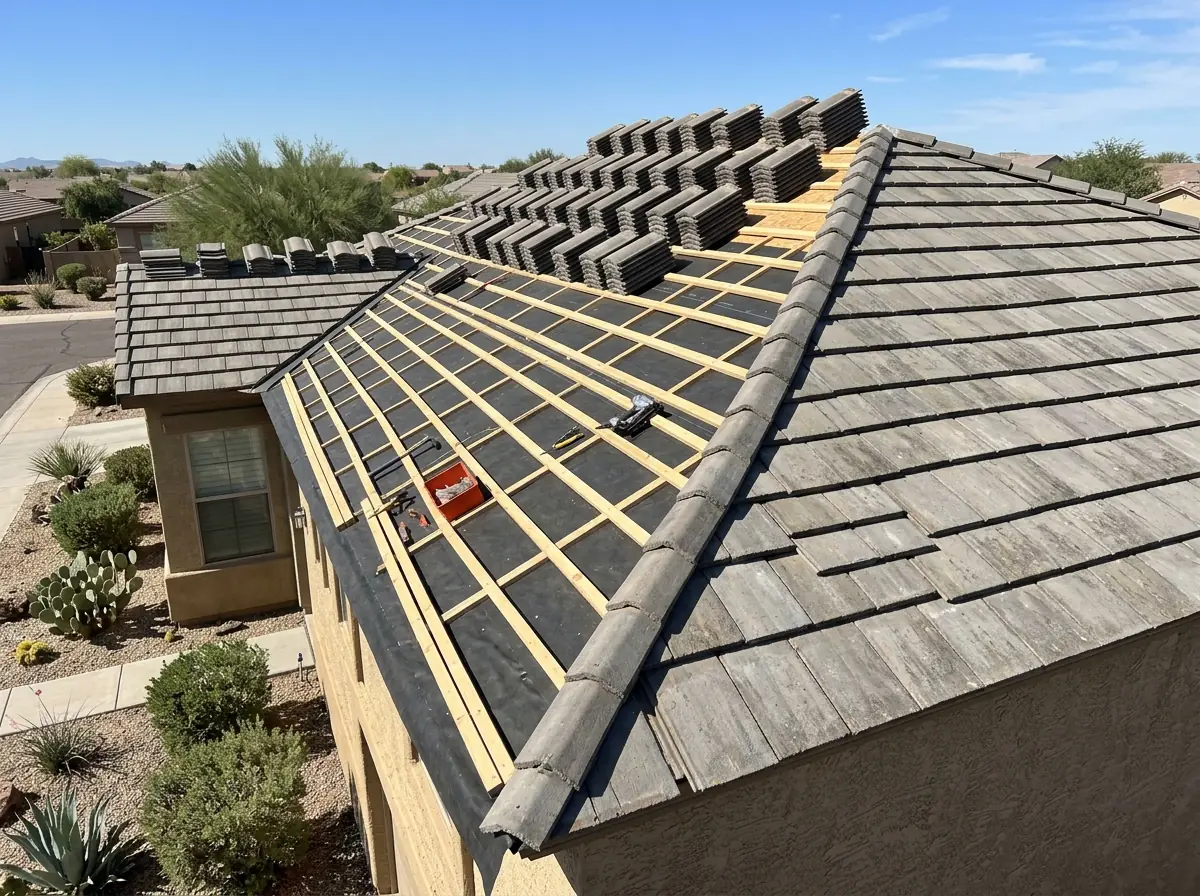
An underlayment replacement is a lift-and-relay job. The tiles come off and are stacked on the roof, the old underlayment and battens are torn off, and the deck is checked. New underlayment, battens and flashings at valleys, walls and pipes go down, then the tiles go back. The code allows sound clay or cement tile to be reinstalled but not damaged, cracked or broken tile, and rusted or damaged flashings, vents and edgings have to be replaced.
Slope matters here. On tile roofs between 2½:12 and 4:12, the code requires two layers of underlayment. Ask the estimate to name the underlayment product and say whether it's one layer or two.
Tile Roof Repair
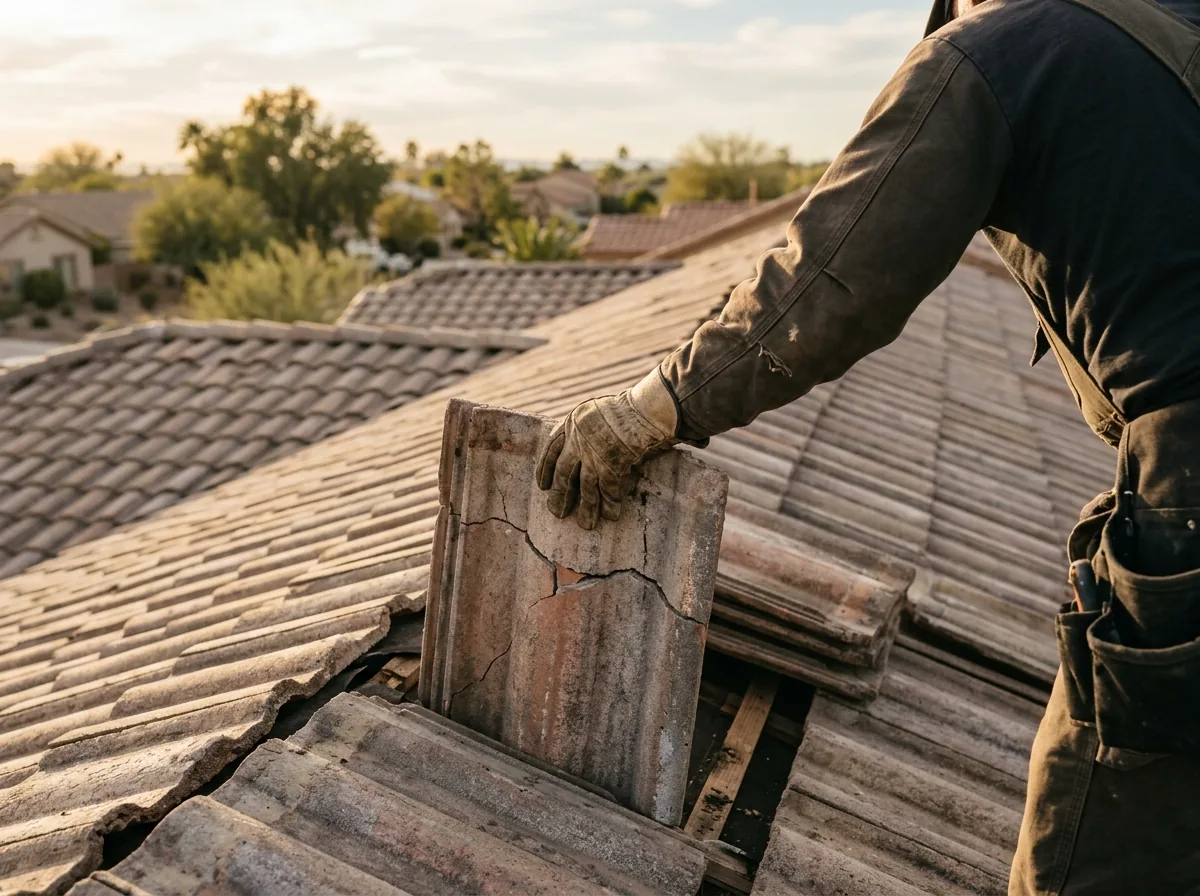
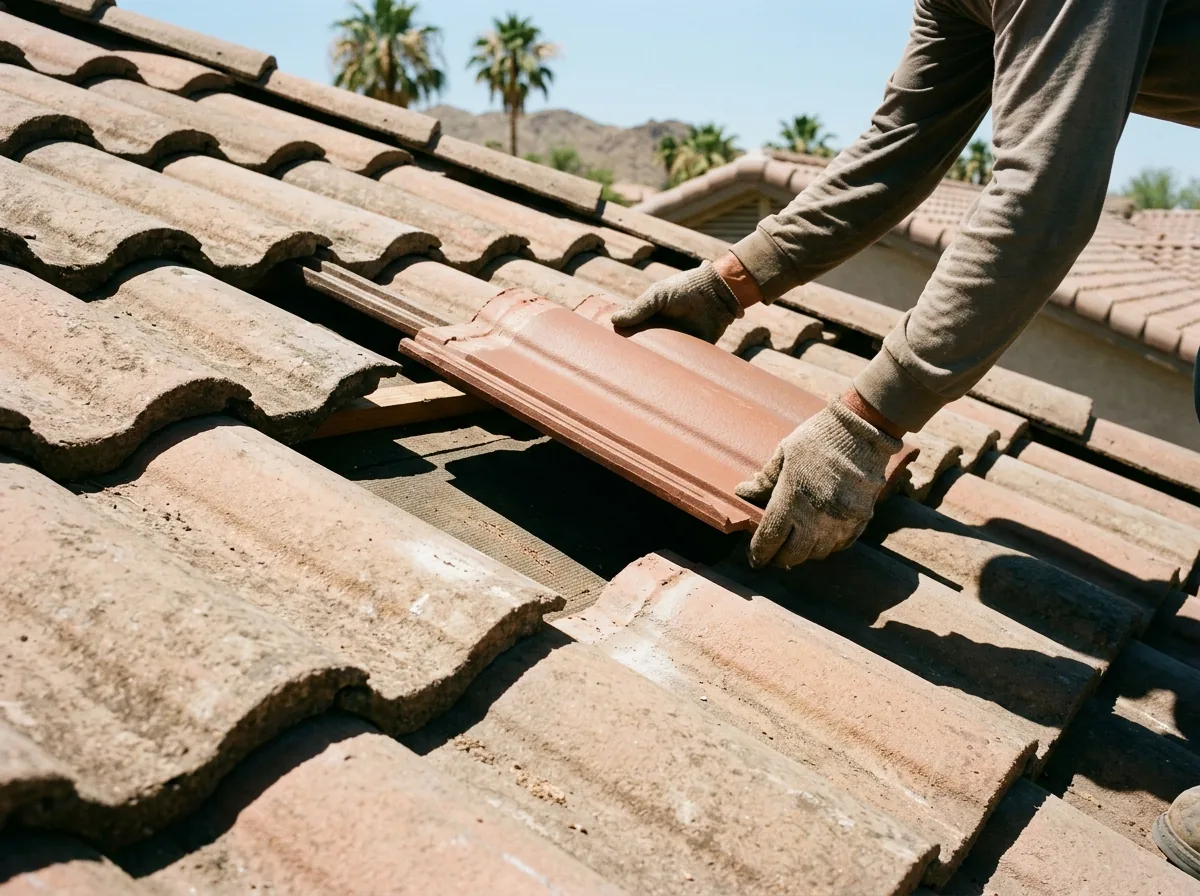
Tile roof repair covers the problems that don't need the whole roof lifted: cracked or slipped field tiles, loose hip and ridge tiles, rusted or clogged valley metal, and failed flashing around vents, pipes and skylights. Concrete and clay tile both come in S-shaped and flat profiles, and a repair only looks right when the replacement tile matches the profile and color.
Fastening counts too. The code requires at least one fastener on every perimeter tile, and tiles weighing under 9 pounds per square foot installed need at least one fastener per tile at any slope.
See tile roof repair.
Foam Roofing
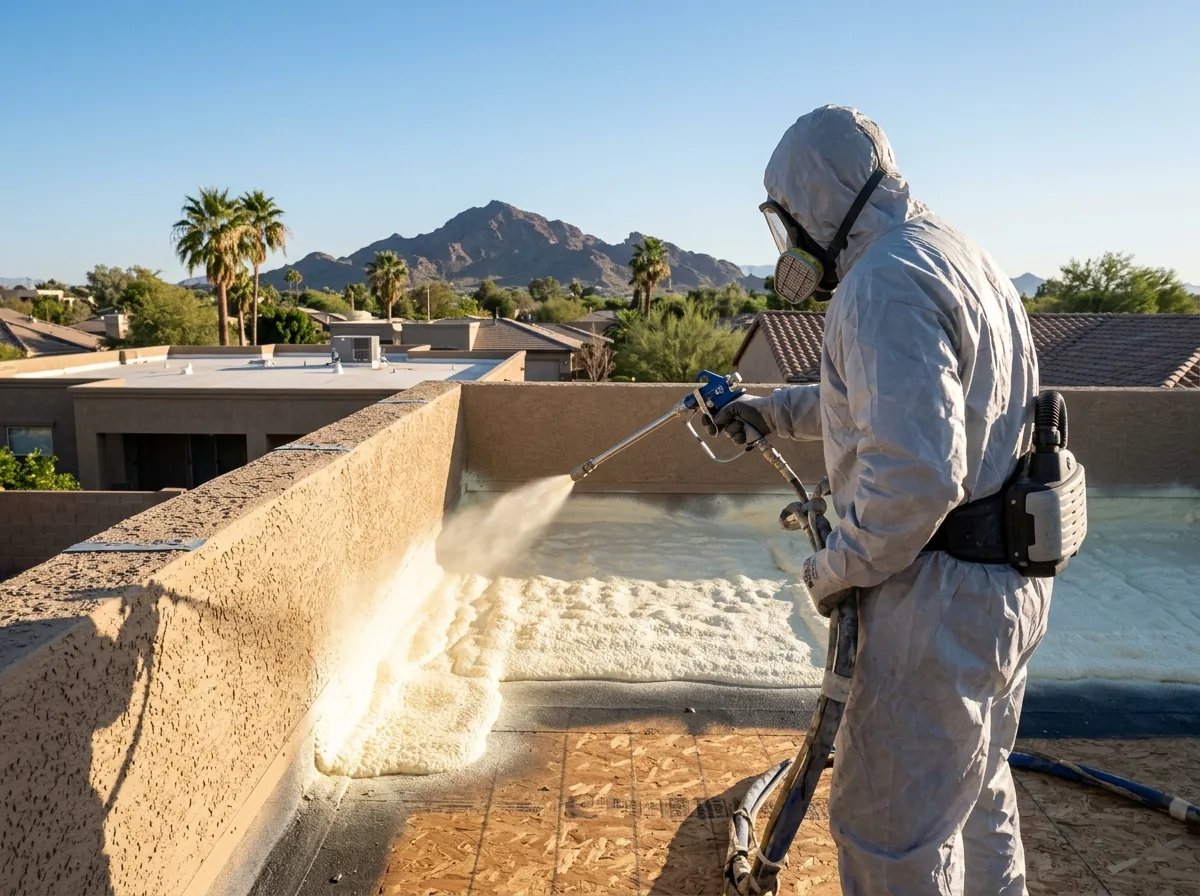
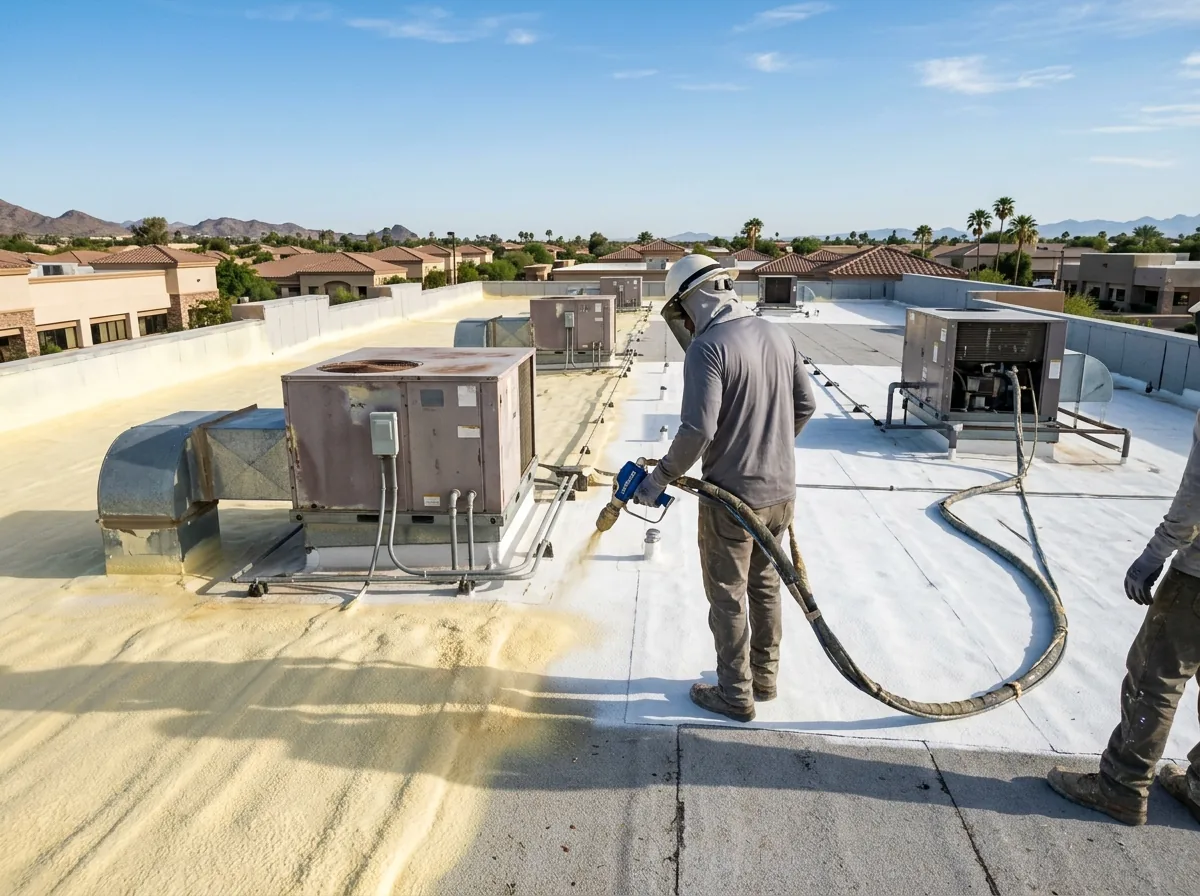
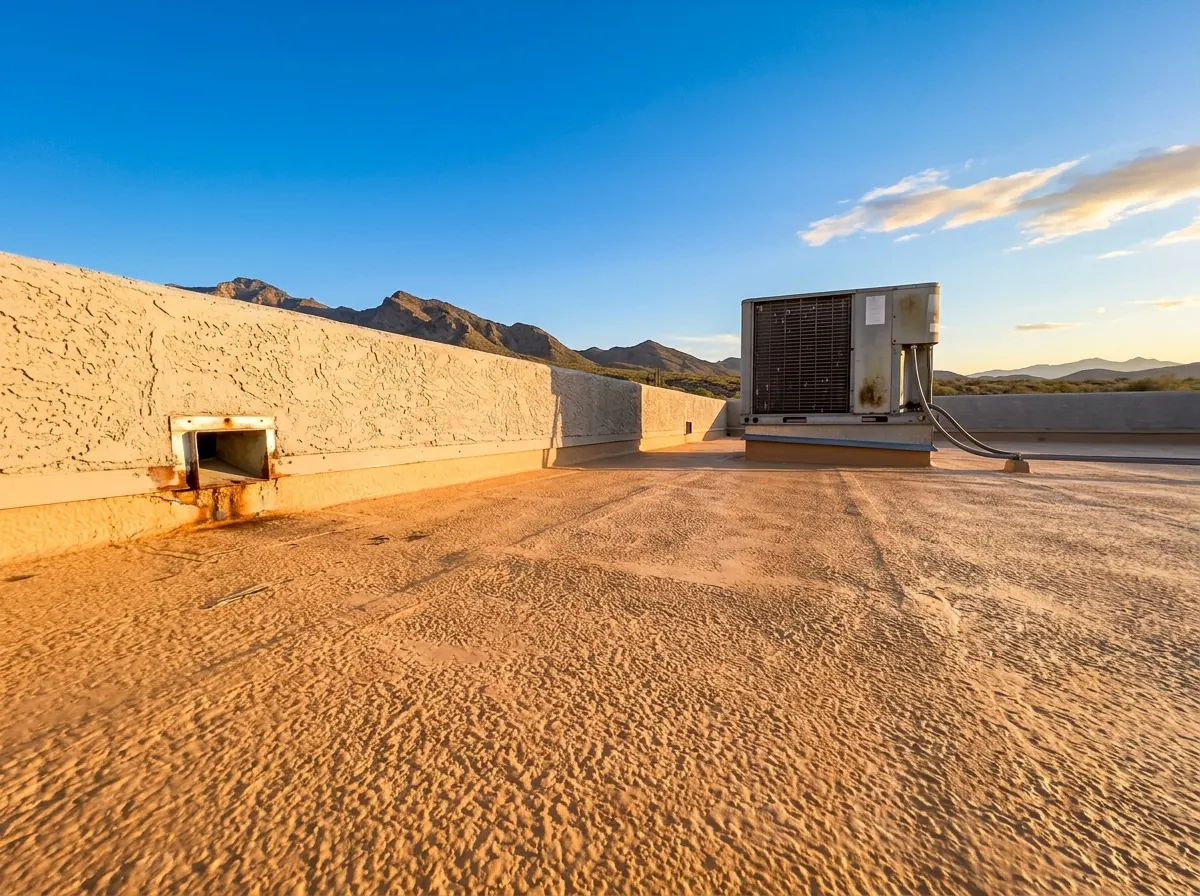
Spray polyurethane foam (SPF) goes on as a liquid and expands into one seamless, insulating layer with no laps or seams to open up. That's why it suits the flat and low-slope sections behind parapet walls that you see across Tempe. The code sets a minimum design slope of ¼ inch per foot for drainage, and it requires a liquid-applied protective coating within 2 to 72 hours after the foam is sprayed.
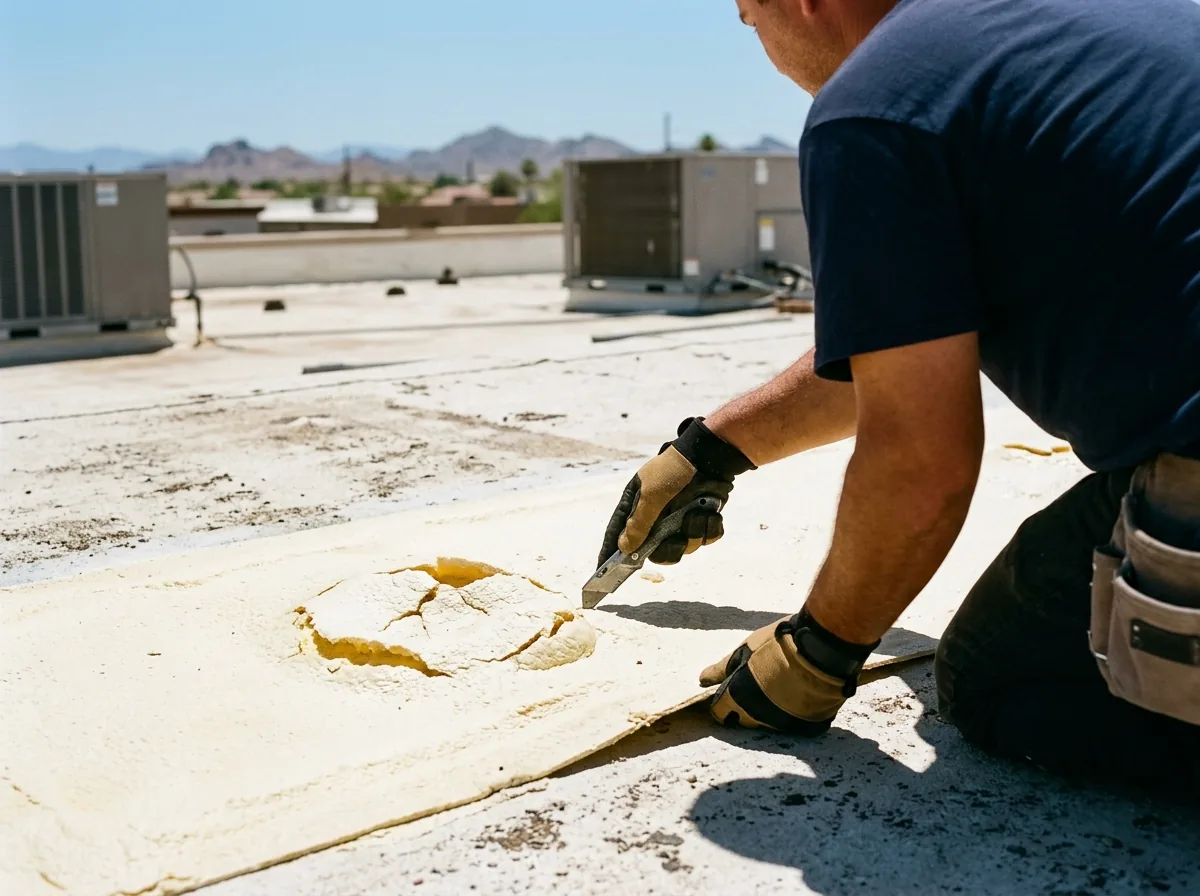
Foam roof problems to look for: ponding at low spots, blisters, bird pecking, coating worn thin enough to expose the foam to the sun, and cracking where the foam meets parapet caps and scuppers.
See foam roofing and foam roof repair.
Roof Coatings and Foam Recoats
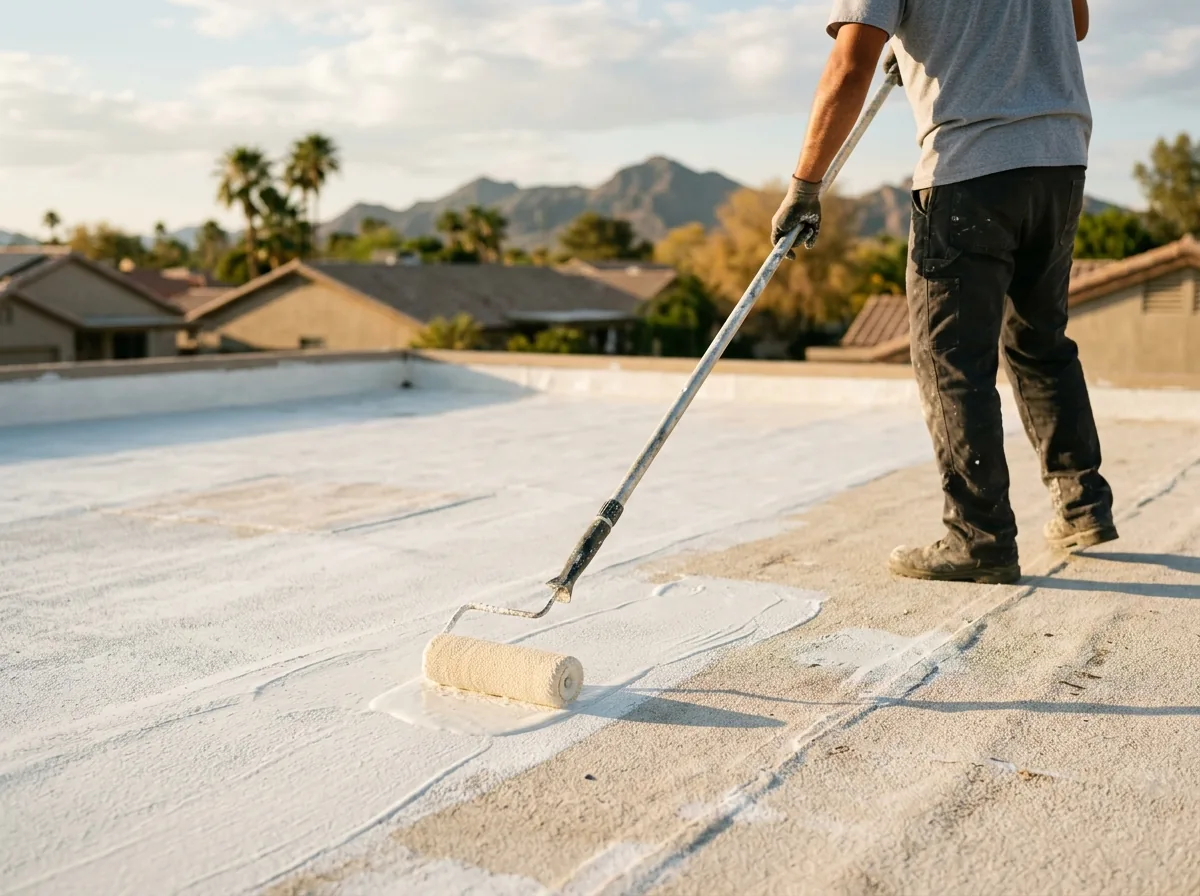
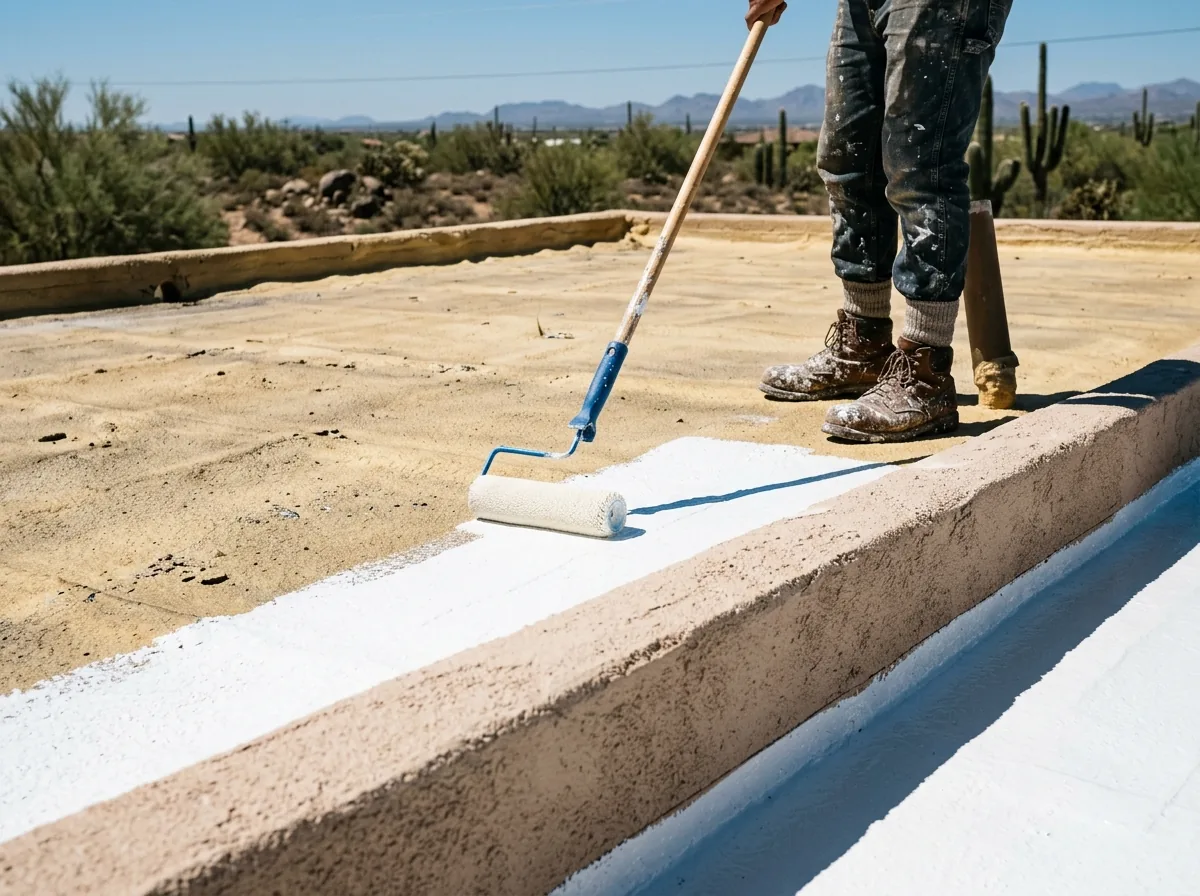
On a foam roof, the coating is the part that wears out. The foam lasts as long as the coating keeps sunlight off it. The code lists three protective coating types for foam: acrylic (ASTM D6083), silicone (ASTM D6694) and moisture-cured polyurethane (ASTM D6947).
Our view: pick the product for the roof, not the price per bucket.
A recoat doesn't require a tear-off. The code allows a new coating over an existing coating, foam, built-up, modified bitumen, single-ply or metal roof, as long as the roof isn't water-soaked or deteriorated. The crew washes the roof, cuts out and patches damaged foam, primes where the manufacturer calls for it, and applies the coating at the thickness the manufacturer specifies. Ask for that thickness and the recoat interval in writing.
See roof coating.
Shingle Roofing
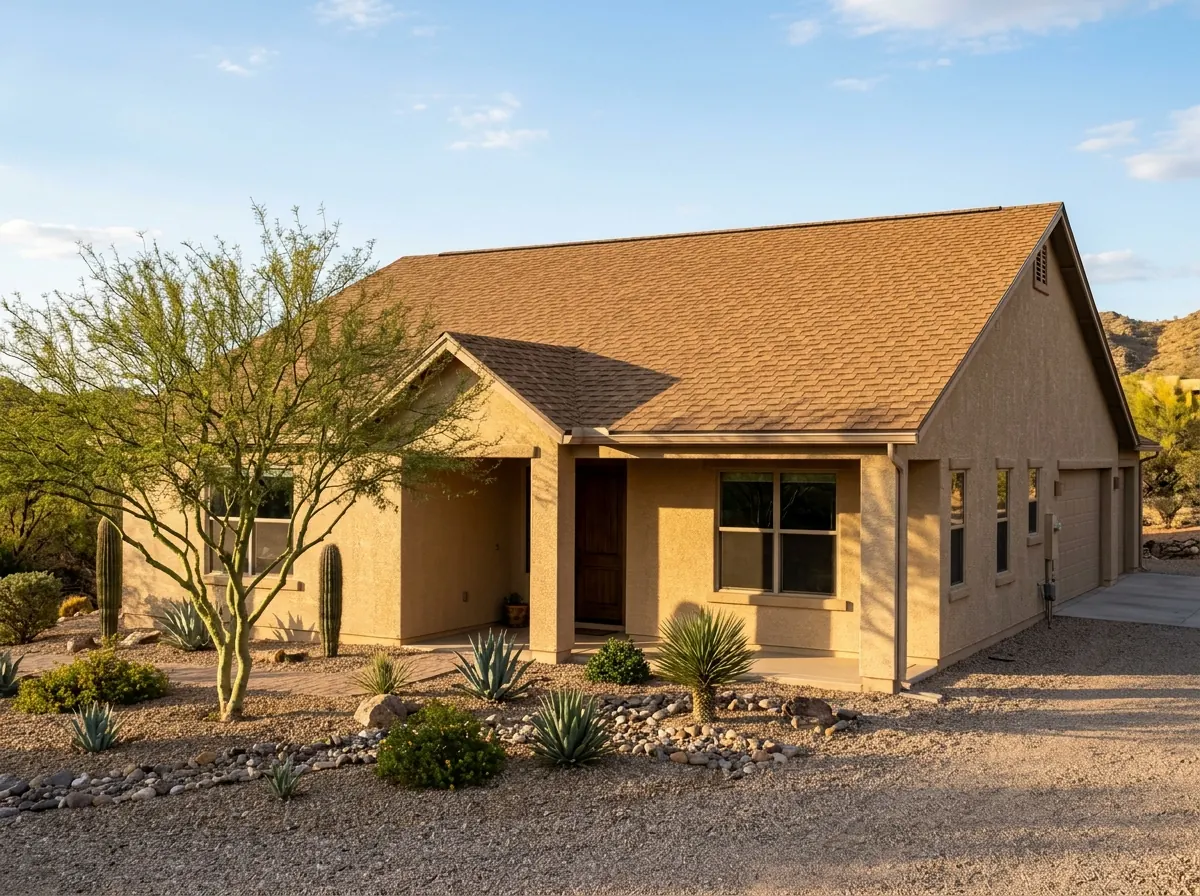
Asphalt shingles need a slope of at least 2:12, and between 2:12 and 4:12 the code requires two layers of underlayment. Each strip shingle gets at least four fasteners, and shingles have to be tested for wind to ASTM D7158 with a classification that matches the design wind speed.
Attic ventilation belongs in any shingle quote.
See shingle roofing.
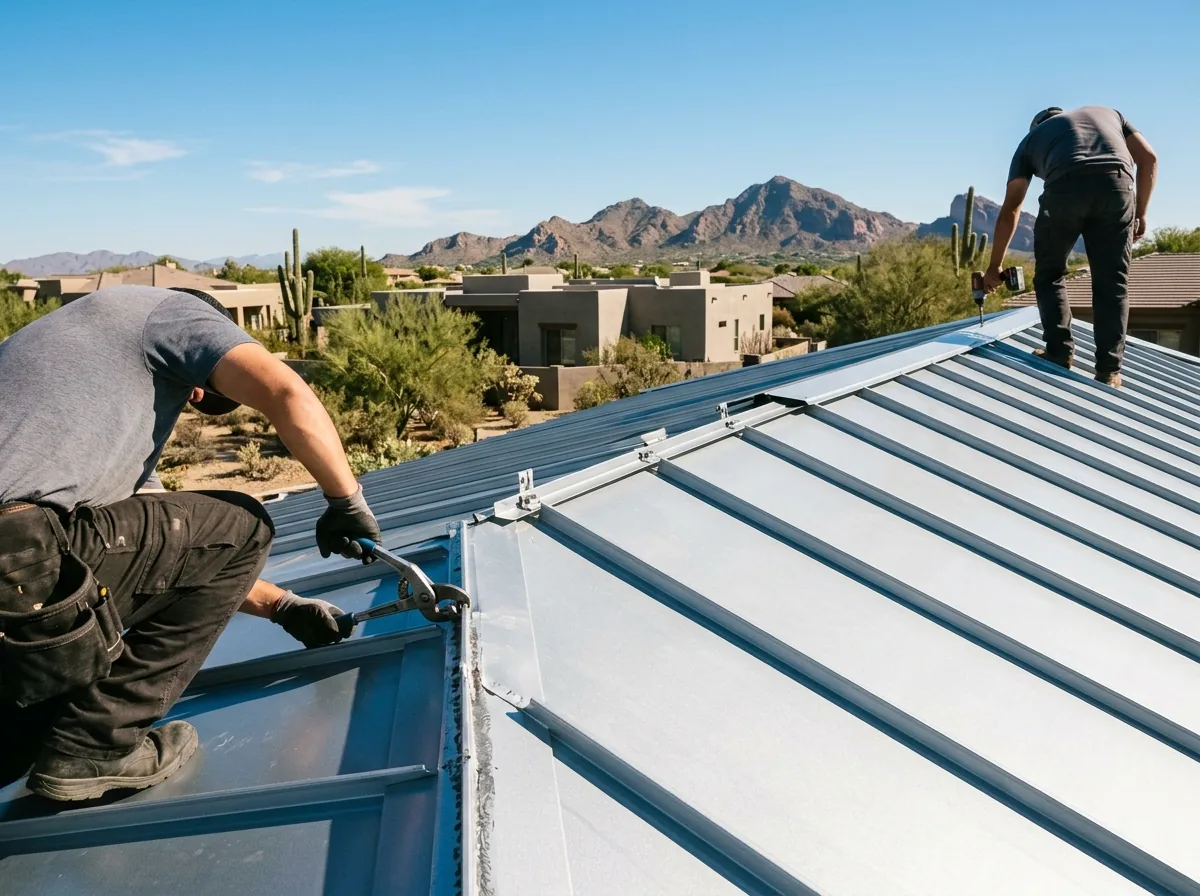
Metal Roofing
Metal roofing comes in two broad kinds. Standing-seam systems, with raised seams and hidden fasteners, can go on slopes as low as ¼ inch per foot. Lapped, exposed-fastener panels need 3:12 without lap sealant, or ½:12 with sealant applied to the manufacturer's instructions. A light, reflective finish helps keep attic heat down.
See metal roofing.
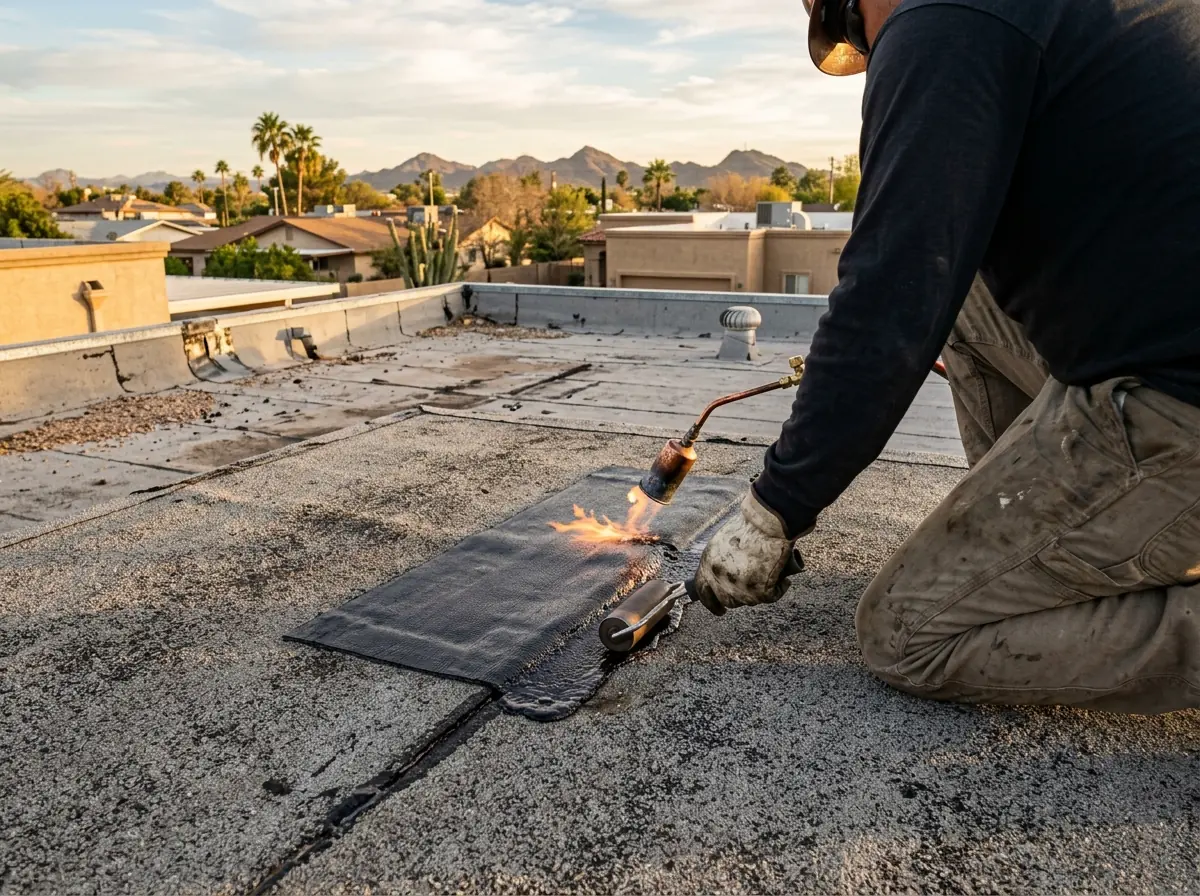
Flat Roof Repair and Replacement
Foam isn't the only flat roof option. Modified bitumen, built-up roofing (BUR) and TPO single-ply membrane all need a design slope of at least ¼ inch per foot for drainage (coal-tar built-up roofs can go to ⅛ inch). Unless the roof sheds water over its edges, the code wants a drain at each low point. On a reroof, the existing slope can stay as long as the roof drains positively.
Check the edges first: parapet caps, scuppers, and the flashing around AC stands and pipes.
See flat roof repair.
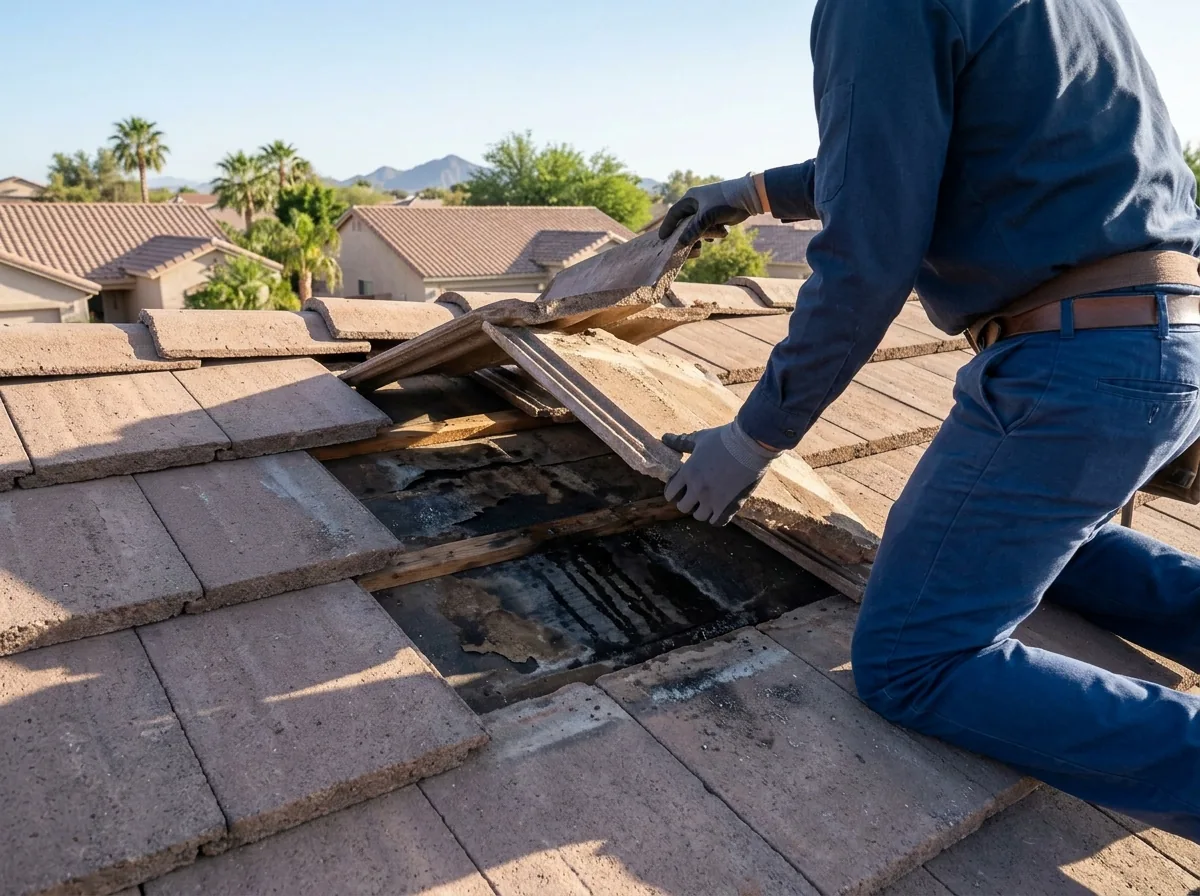
Roof Leak Repair
On a tile roof, water can travel along the underlayment and battens before it drips, so the stain on your ceiling may be several feet from where the water gets in. Leak repair starts with tracing the path back to the entry point: a valley, a wall flashing, a pipe boot, a skylight curb, or on flat roofs a parapet cap or an AC stand.
A tarp or sealant patch buys time. The permanent fix replaces whatever failed, whether that's a tile, a flashing, a pipe boot or a section of underlayment.
See roof leak repair and roof repair.
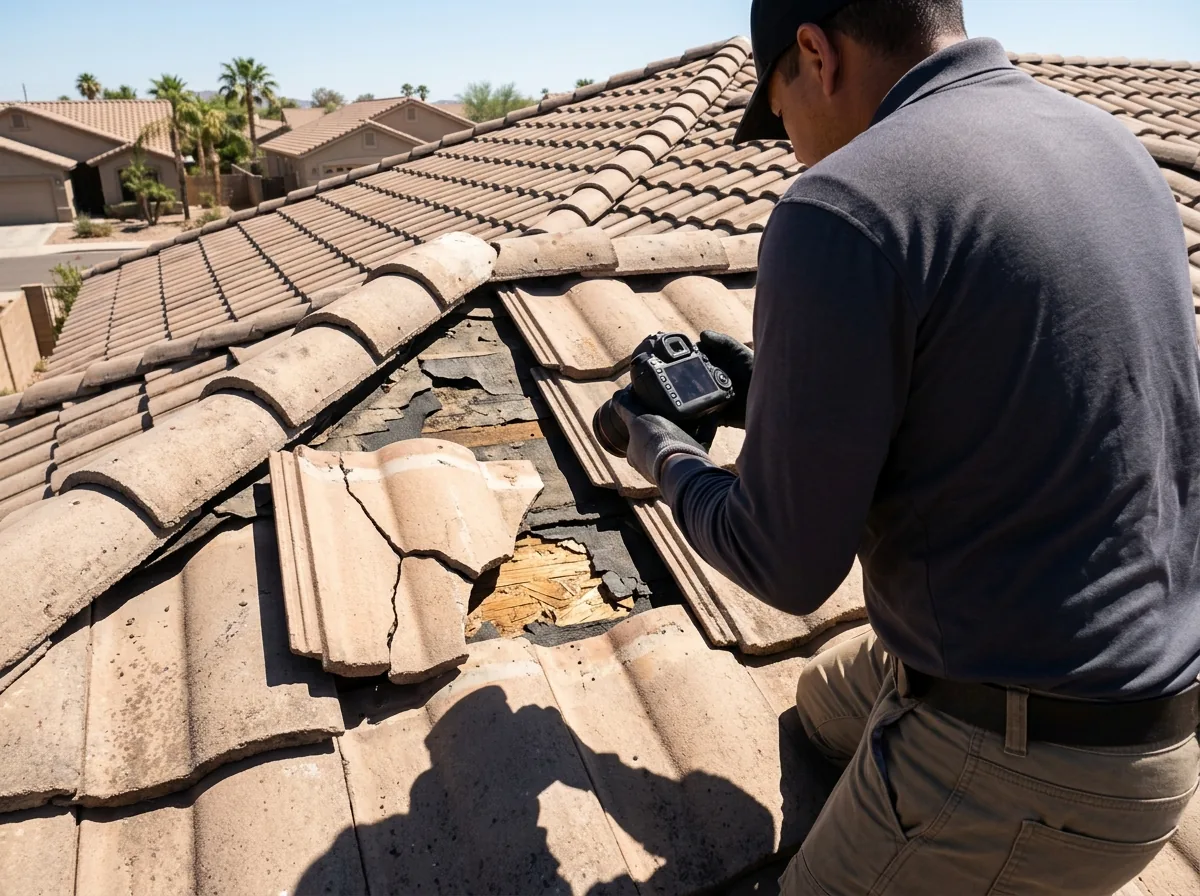
Roof Inspections
A roof inspection should leave you with photos and written findings: tile condition, underlayment showing through broken tiles, flashing, foam coating wear, and drains and scuppers. Book one before monsoon season, after a big storm, and before buying or selling a home.
See roof inspection.
Commercial Roofing in Tempe
Most commercial roofs in Tempe are low-slope: foam, TPO, modified bitumen, built-up, or a restoration coating over one of those. Commercial roofing in Arizona needs a C-42 or CR-42 license from the Registrar of Contractors (R-42 covers residential only), so commercial requests go to a roofer who holds the commercial classification.
See commercial roofing.
Retail Centers and Restaurants
Rooftop HVAC units, curbs and kitchen exhaust fans put a lot of penetrations on a small roof. Work gets scheduled around business hours so the doors stay open.
Offices and Light Industrial Buildings
Big low-slope decks often have a choice between a restoration coating and a full replacement. A core sample and a moisture survey tell you which one the roof can take.
Apartments, Condos and HOA Communities
Several buildings mean phased work, board approvals and notices to residents.
Churches, Schools and Nonprofits
Budgets run on fixed cycles, so a maintenance plan and an inspection report the board can read help spread the work over time.
Get a free roofing quote in Tempe
- Free, no-obligation roof estimates
- Written scope: tear-off, underlayment, flashing, coating
- Photos of every finding on your roof
- Permit and code questions answered up front
- One call, one local roofer
Specialty Roofing Services
Monsoon Storm Damage and Emergency Tarping
The National Weather Service treats June 15 through September 30 as Arizona's monsoon season. Storm winds lift and break tile, peel back flashing, and wash debris into valleys and scuppers. Take photos before anything is tarped. Your insurer will want them.
Skylight Repair and Replacement
For any penetration wider than 30 inches, the code calls for a cricket on the uphill side to push water around it.
Gutters, Scuppers and Downspouts
Parapet roofs drain through scuppers, and a blocked scupper turns a flat roof into a shallow pool. Keeping them clear and properly flashed is cheap insurance.
Roof Ventilation
Balanced intake and exhaust vents move hot air out of the attic. That protects shingles and underlayment from baking from below and takes some load off your AC.
Solar Panel Detach and Reset
Roof work under solar panels means removing the panels, then resetting and flashing the mounts. Ask the roofer to coordinate with your solar installer.
Cool Roof Coatings
In Phoenix, the average July low is 84.5 °F and the average high is 106.5 °F (1991-2020 normals at Sky Harbor). A roof barely cools off at night. A white reflective coating on a flat roof cuts the heat it soaks up during the day.
Why Choose Tempe Expert Roofing
We're a referral service, and we keep the process in writing.
One Call, One Local Roofer
You tell us about the job once. We connect you with one independent Tempe-area roofer, and you deal with them directly from the inspection on.
A Written Scope Before Work Starts
The estimate should list tear-off, underlayment type and layers, flashings, and the coating product and thickness, so you can compare quotes line by line.
Photos of What's on Your Roof
You shouldn't have to climb a ladder to see the problem. Ask for photos of every finding.
Permit and Code Answers Up Front
Whether your job needs a Tempe permit, and which code edition applies, gets answered before the contract, not halfway through the job.
Our Roofing Process
- 1
Call or Send the Form
Tell us the roof type, what you're seeing and your ZIP code.
- 2
Roof Inspection
A local roofer inspects the roof, inside the attic where they can, and photographs what they find.
- 3
Written Estimate
You get the scope, materials and price in writing, plus whether a permit applies.
- 4
The Work
Tear-off, deck repair, underlayment, flashing, covering or coating, as the estimate describes.
- 5
Final Walk-Through and Cleanup
The roofer walks the job with you, clears debris and nails, and hands over product and warranty paperwork.
Roof Replacement Cost in Tempe: What Moves the Price
We won't quote a price per square on this page, because on Tempe roofs the spread comes from a handful of things you can check on your own estimate:
Roof type and material
Tile, foam, shingle and metal are priced very differently, and many homes have two of them.Size and pitch
Steeper roofs take longer and need more safety setup.Tear-off
How many layers come off, and how heavy they are.Deck repair
Rotted or soft sheathing is usually unknown until the old roof is off. Ask how it's priced per sheet.Reused tile versus new tile
Relaying sound tile saves material. Matching discontinued profiles costs more.Flashings and details
Valleys, chimneys, skylights, parapets and AC stands all add labor.Permit and access
A permit when the scope calls for one, plus how easily materials can get onto the roof.Timing
Scheduling around monsoon season and summer heat.
Things to Know Before Reroofing in Tempe
Permits
A same-class replacement roof covering that doesn't add load is exempt from a Tempe building permit. New sheathing or other roof assembly work isn't. The Tempe Permit Center answers questions at 480-350-4311 or permitcenter@tempe.gov.Code edition
Tempe adopted the 2024 International Codes effective July 1, 2026. Through December 31, 2026, permit applications may use the 2018 or the 2024 codes. From January 1, 2027, they must use the 2024 codes.No overlays on tile
The code doesn't allow a recover over clay or cement tile, over a water-soaked or deteriorated roof, or over two or more existing layers.Check the license
Look up the roofer's ROC number: R-42 residential, C-42 commercial, CR-42 both.HOA approval
If you're in an HOA, ask early whether it must approve the tile profile and color, or a coating color, before work starts.Book before monsoon
Spring is the time to fix a lifted tile or a thin coating, before the June 15 start of monsoon season.Plan for the heat
Ask the roofer how summer heat affects working hours and the schedule.
Roofing Service Area
Tempe Expert Roofing takes roofing requests from every Tempe neighborhood, north to south.