
Foam Roofing Services in Tempe
Foam suits roofs that are flat or nearly flat, such as the sections behind parapet walls, over patios and over additions. The code sets a minimum design slope of ¼ inch per foot for drainage on foam roofs.
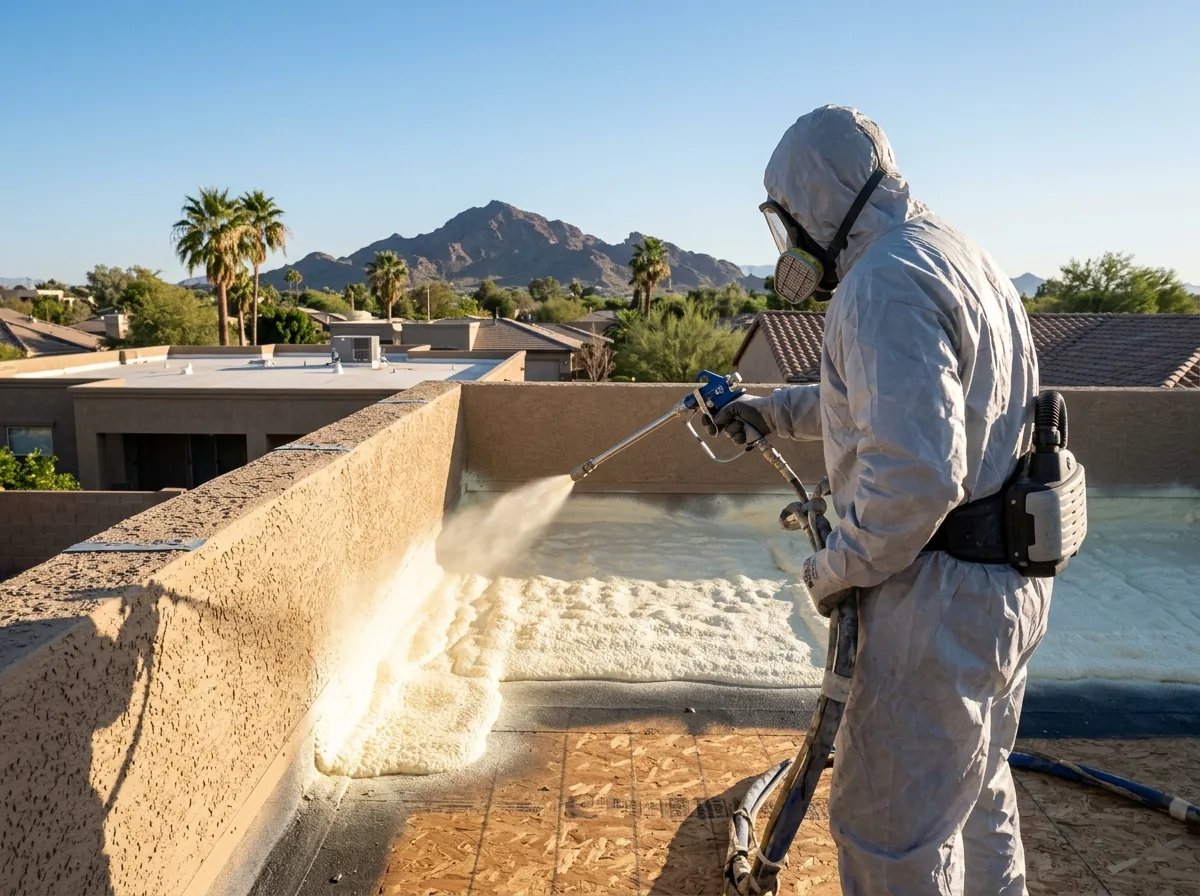
New Spray Foam Roof Installation
A new foam roof starts with a clean, dry deck. The foam is sprayed in passes to the thickness the system calls for, building up slope toward drains and scuppers where the deck is flat. Foam used as roof insulation has to meet ASTM C1029 Type III or IV, or ASTM D7425, and the foam roof system has to be tested to FM 4474, UL 580 or UL 1897 for wind uplift.
Foam Over an Existing Flat Roof
A foam system can sometimes go over an existing built-up or modified bitumen roof instead of tearing it off. The code rules it out when the existing roof is water-soaked or deteriorated, or when it already has two or more layers. Ask the roofer how they'll check for trapped moisture before foam goes on top.
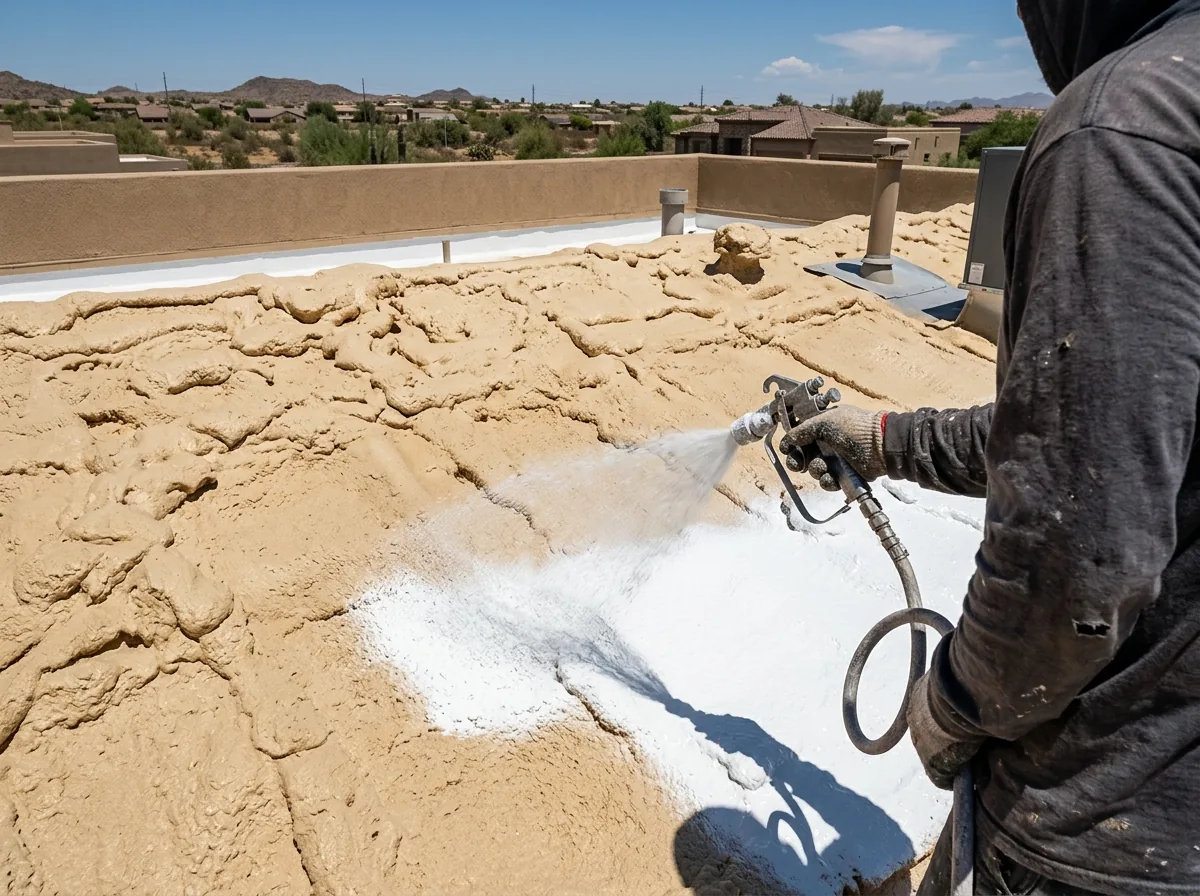
Protective Coatings on New Foam
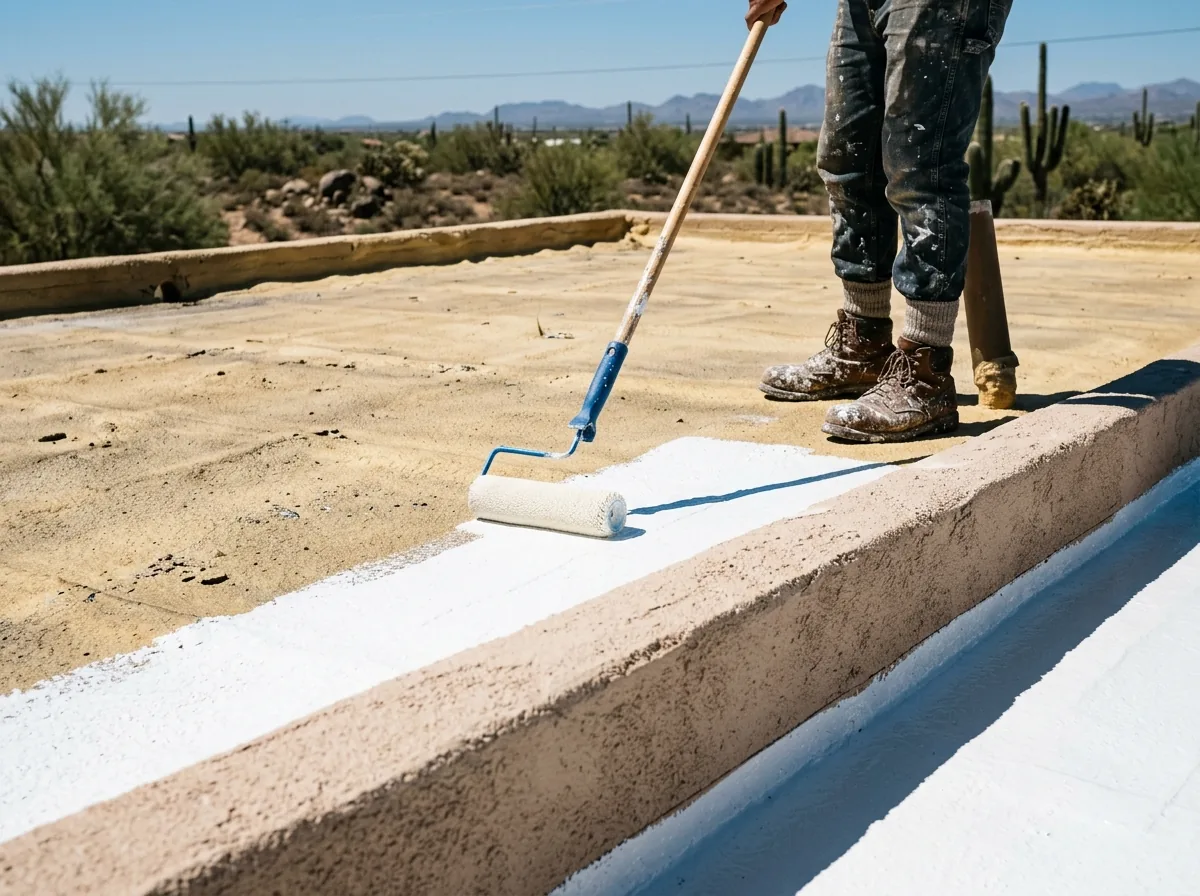
The coating is what faces the sun. The code lists three types for foam roofs: acrylic (ASTM D6083), silicone (ASTM D6694) and moisture-cured polyurethane (ASTM D6947), applied between 2 and 72 hours after the foam. The coating manufacturer sets the thickness and the recoat schedule, so get both in writing. See roof coating.
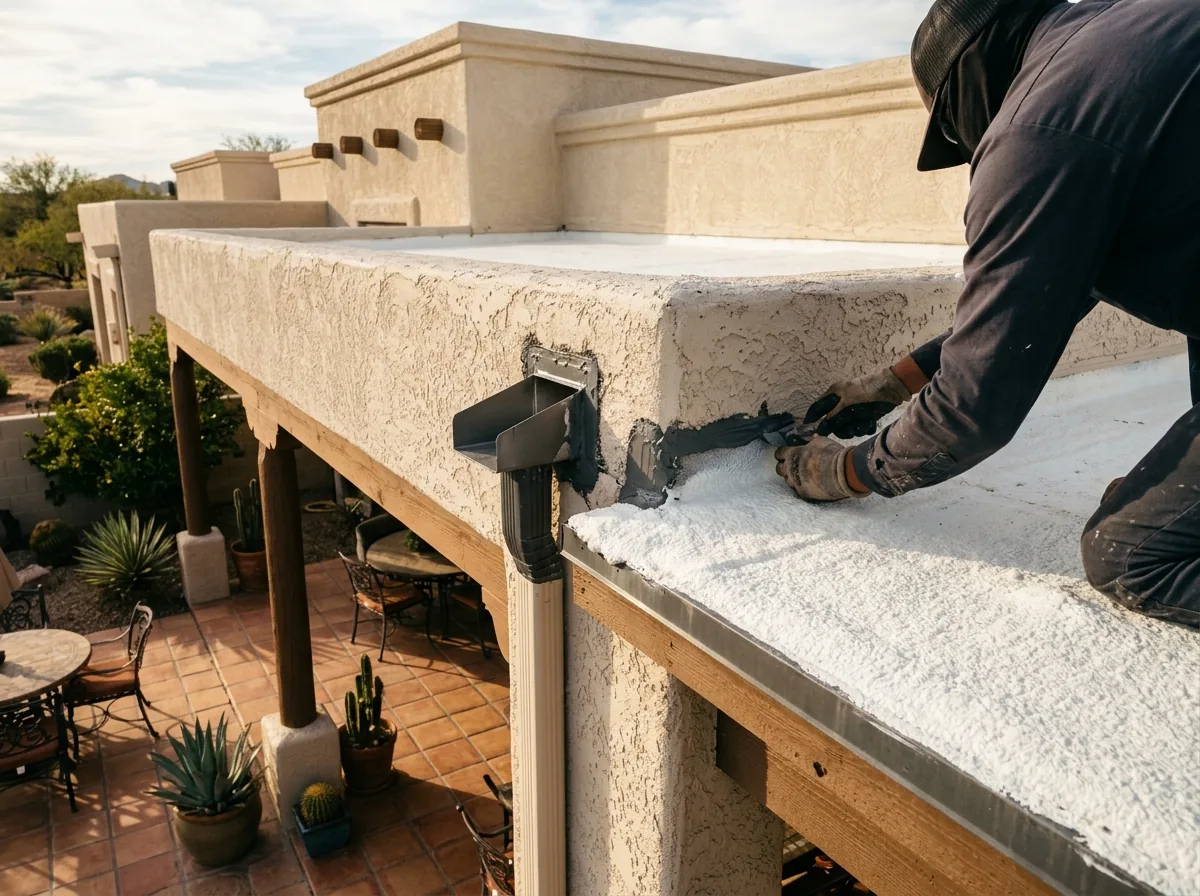
Foam on Patio and Addition Roofs
A patio cover or room addition can have its own low-slope roof tied into the main house. Foam can cover the flat section in one seamless layer and seal up to the wall, as long as the flashing where it meets the main roof or wall is done right. The code requires flashing at every wall-to-roof intersection and wherever the slope changes.
Why Tempe homeowners call Tempe Expert Roofing
- Free, no-obligation roof estimates
- Written scope: tear-off, underlayment, flashing, coating
- Photos of every finding on your roof
- Permit and code questions answered up front
- One call, one local roofer
How a Foam Roof Is Installed
- 1
Prep
Loose material and debris come off, wet or damaged areas are cut out, and the surface is cleaned and dried. - 2
Edges and penetrations
Scuppers, drains, pipe jacks and AC stands are prepped and masked so the foam can seal around them. - 3
Spray
Foam goes on in passes, with extra thickness at low spots to push water toward the drains. - 4
Coat
The protective coating goes on within the 2 to 72 hour window, at the thickness the manufacturer specifies. - 5
Inspect
A final walk checks for pinholes, thin spots and low spots that still hold water.
What Affects the Cost of a Foam Roof
Roof area and access
How big the roof is and how easily equipment and material get up to it.Tear-off or foam over
Removing the old roof adds labor. Foam over a dry, sound existing roof avoids it.Wet areas
Moisture found during prep has to be cut out and replaced before foam goes on.Thickness and slope
Building up low spots so water drains means more foam.Coating
Acrylic, silicone or polyurethane, and the thickness the manufacturer requires.Details
Every scupper, drain, pipe, AC stand and parapet edge takes hand work.
Foam Roof Pros and Cons
Our view: foam is a strong choice for the flat parts of a Tempe roof, with one condition. The coating has to be kept up.
Pros
no seams, added insulation above the deck, drainage slope can be sprayed in, and a worn roof can usually be recoated without a tear-off.Cons
the foam breaks down in sunlight once the coating wears through, birds and foot traffic can damage it, and ponding water at low spots adds wear.
Already have a foam roof with problems? See foam roof repair.