
Roof Inspection Services
What gets checked depends on the roof. A house with tile over the main rooms and foam over a patio gets both checklists.
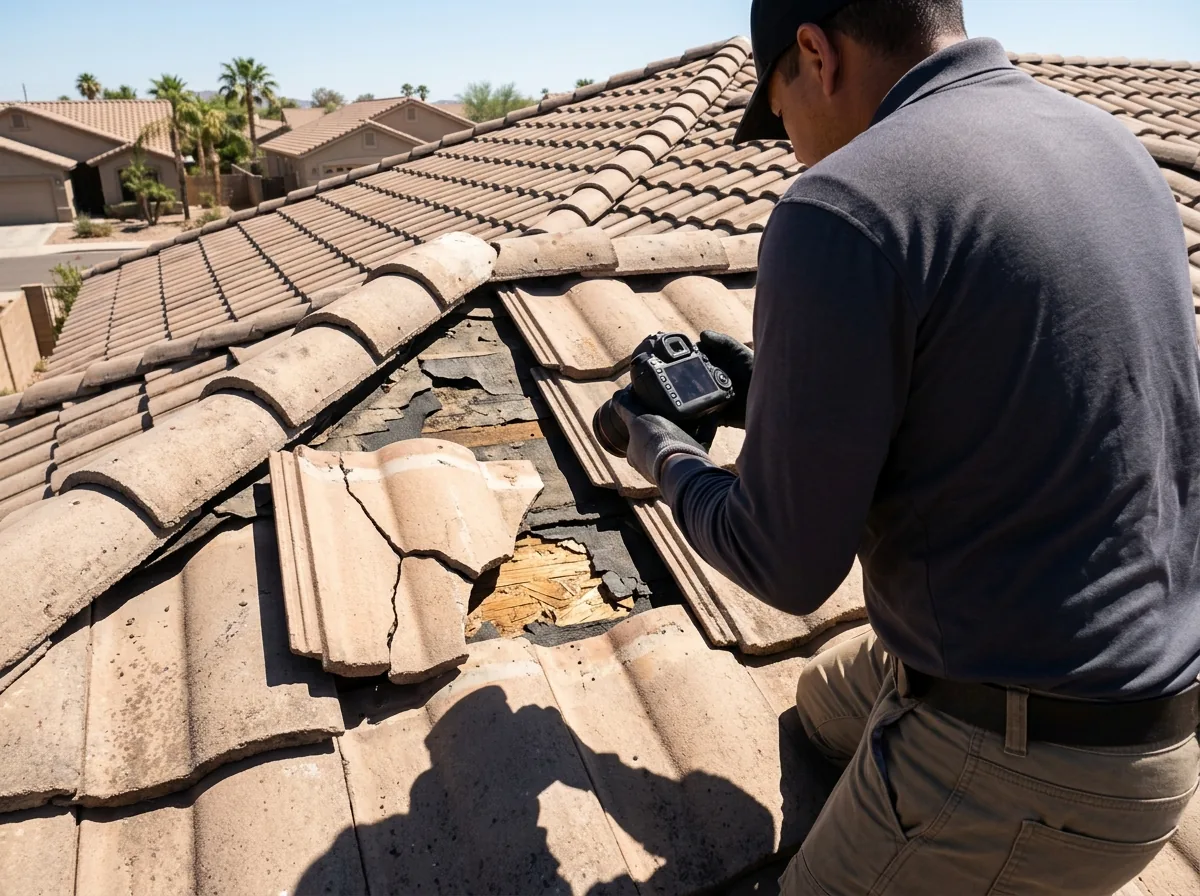
Tile Roof Inspection
A tile inspection looks for cracked, slipped and missing tiles, loose hip and ridge caps, and the condition of valley metal and wall flashing. The underlayment is the part that matters most and the hardest to see, so the inspector lifts a few tiles in different areas or looks where tiles have slipped. On slopes from 2½:12 to 4:12, the code requires two layers of underlayment, so the slope is worth noting too.
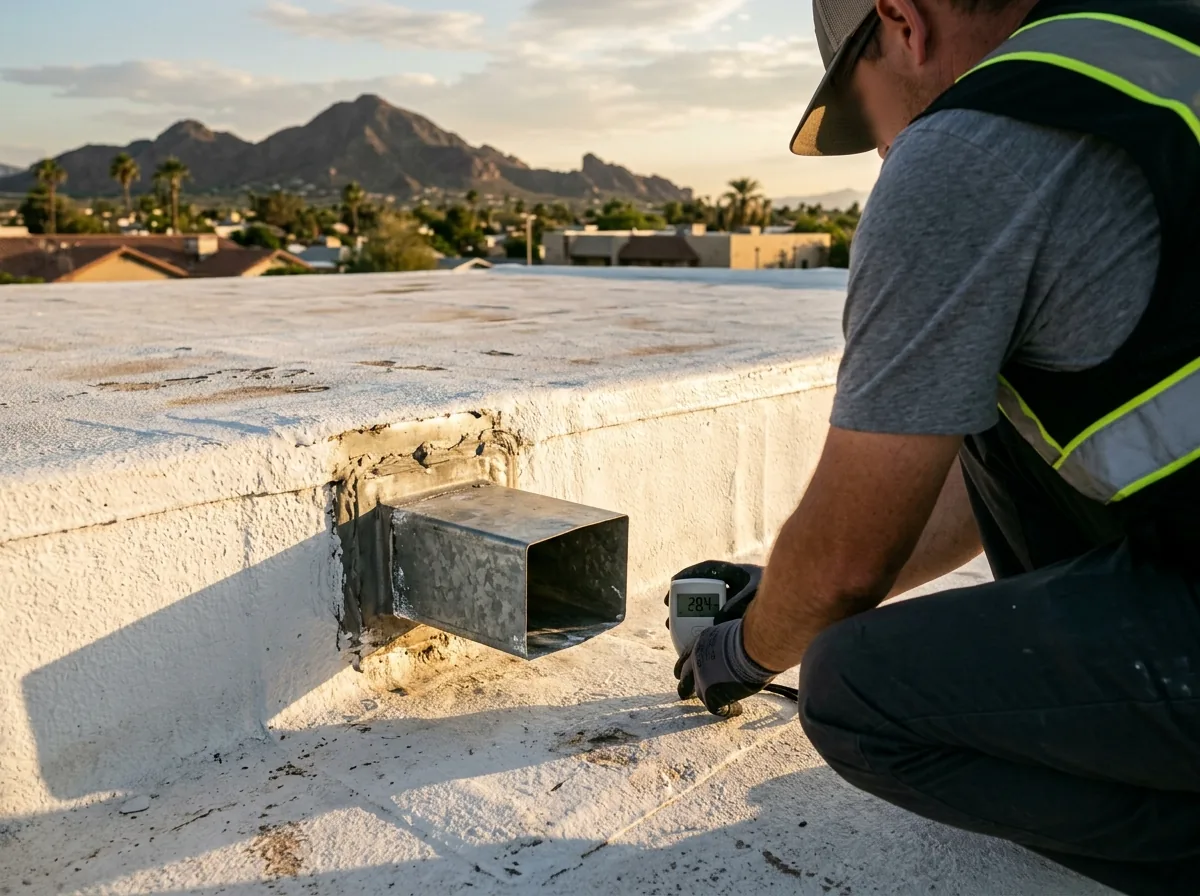
Foam and Flat Roof Inspection
On foam, the inspector checks coating wear, bare foam, blisters, bird damage and soft spots, and may core a small sample to test for moisture. On modified bitumen and built-up roofs, the check covers seams, blisters and splits. On all flat roofs: ponding, blocked scuppers and drains, and the joints at parapets, pipes and AC stands.
Pre-Monsoon and Post-Storm Inspections
The National Weather Service treats June 15 through September 30 as Arizona's monsoon season. An inspection in spring finds lifted tiles, thin coating and clogged valleys while there's still time to fix them. After a storm, an inspection documents the damage with photos, which your insurer will ask for.
Inspections for a Home Sale
Buyers and sellers use a roof inspection to know what they're dealing with before closing. A useful report says which roof types the house has, their condition, what needs repair now and what can wait, with photos for each item.
Why Tempe homeowners call Tempe Expert Roofing
- Free, no-obligation roof estimates
- Written scope: tear-off, underlayment, flashing, coating
- Photos of every finding on your roof
- Permit and code questions answered up front
- One call, one local roofer
Questions to Ask Before an Inspection
- Will you go on the roof, or inspect from the ground or a drone?
- Will you lift tiles to check the underlayment?
- Will you check the attic?
- Do I get photos and a written report, and when?
What a Roof Inspection Report Should Include
Roof types and areas
tile, foam, shingle or membrane, and where each one is.Photos
of every finding, with its location.Underlayment condition
on tile roofs, from lifted or slipped tiles.Flashing
walls, valleys, pipes, skylights and chimneys. The code requires flashing at every wall-to-roof intersection, change of slope and roof opening.Drainage
ponding, scuppers and drains. Unless a roof sheds water over its edges, the code requires a drain at each low point.Attic
stains on the deck or rafters, and ventilation.Recommendations
split into repair now, plan for, and monitor.
A clean report is a good result. If the roof is sound, the report should say so.
Found a problem? See roof repair or roof leak repair.