
Roof Coating Types
The building code lists three protective coating types for spray foam roofs, each with its own ASTM standard. The same three chemistries show up as restoration coatings on other low-slope roofs.
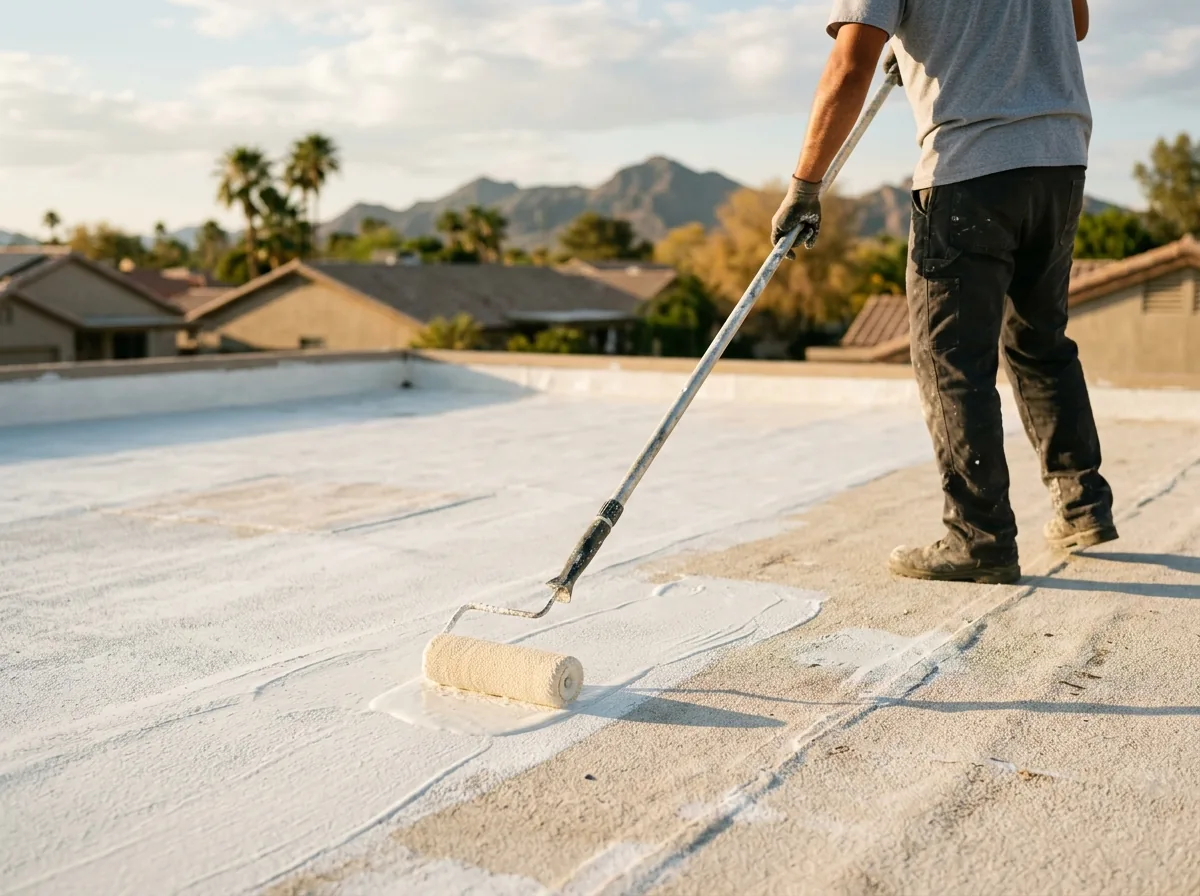
Acrylic Roof Coating
Acrylic coatings meet ASTM D6083. They go on in coats to the thickness the manufacturer specifies and cure as a flexible, usually white, surface. Ask whether the product is rated for water that stands on the roof after rain, because that decides whether it suits your roof's drainage.
Silicone Roof Coating
Silicone coatings meet ASTM D6694. They're applied in one or more coats over a clean, primed surface where the manufacturer requires it. Ask which products the manufacturer approves for recoating it later, before you choose.
Moisture-Cured Polyurethane Coating
Moisture-cured polyurethane coatings meet ASTM D6947 and cure by reacting with humidity in the air. A system can pair a polyurethane base coat with a different top coat. The manufacturer's data sheet sets the thickness and the order of coats.
Why Tempe homeowners call Tempe Expert Roofing
- Free, no-obligation roof estimates
- Written scope: tear-off, underlayment, flashing, coating
- Photos of every finding on your roof
- Permit and code questions answered up front
- One call, one local roofer
Roofs That Can Be Coated Without a Tear-Off
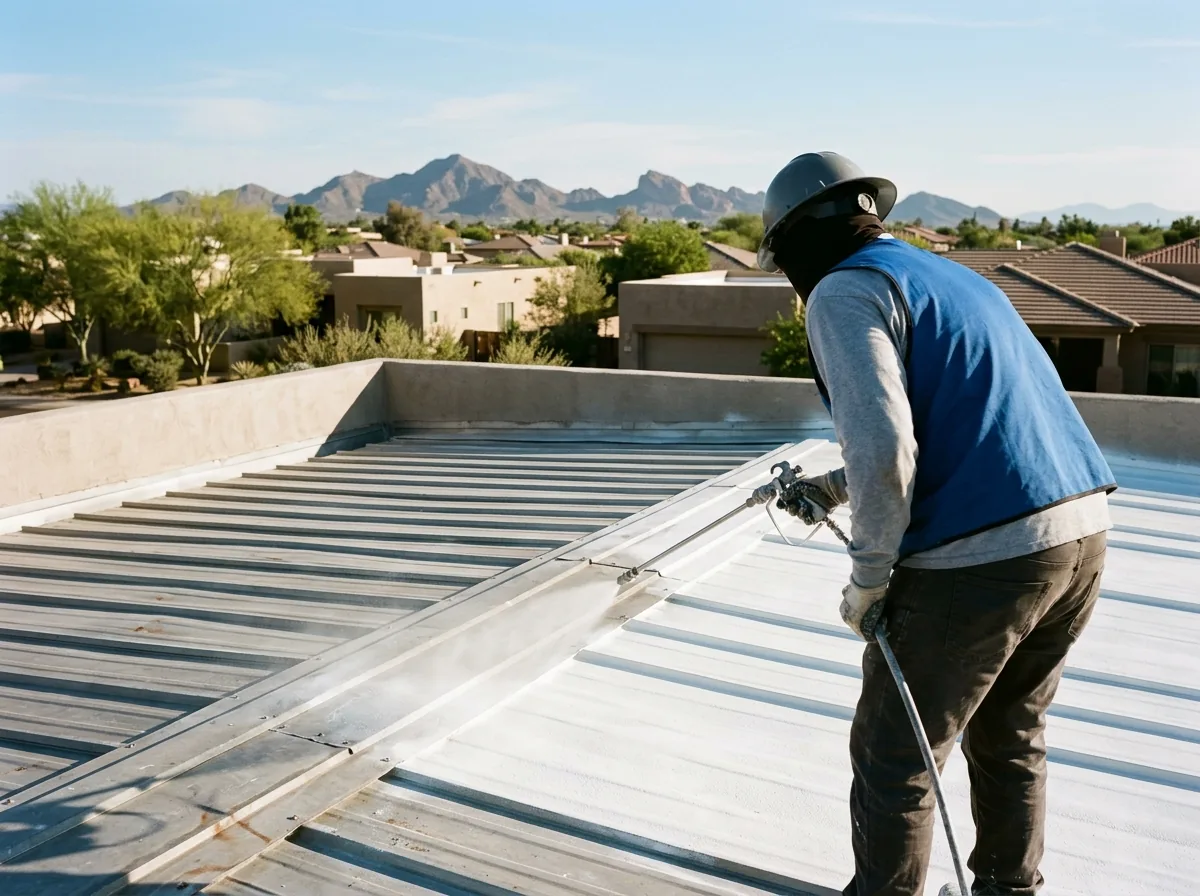
The code allows a new protective coating over an existing coating, metal panel or metal shingle roof, mineral-surfaced roll roofing, built-up roofing, modified bitumen, thermoset and thermoplastic single-ply membrane, and spray foam, all without a tear-off. It's ruled out when the existing roof is water-soaked or deteriorated so badly that it can't serve as a base.
A coating job goes like this:
- 1
Inspect
for wet areas, which may be cored or scanned for moisture and cut out. - 2
Repair
splits, blisters, open seams, loose fasteners on metal, and flashing. - 3
Clean
the roof, usually by power washing. - 4
Prime
where the manufacturer calls for it. - 5
Coat
to the thickness the manufacturer specifies, with extra material at seams and penetrations.
Ask for the product name, the thickness, and the recoat interval in writing. For foam roofs specifically, see foam roof repair.
What Affects the Cost of a Roof Coating
- Roof area and access.
Prep
Washing, repairs, and cutting out wet areas.- Primer, if the manufacturer requires it.
- The coating product and its required thickness.
- Seams, penetrations and edges that need extra material.
Cool Roof Coatings for Tempe Heat
At Phoenix Sky Harbor, the 1991-2020 normals put the average July high at 106.5 °F and the average July low at 84.5 °F, so a roof barely cools off overnight in summer. A white coating reflects much of the sun that a dark roof surface would absorb, which cuts the heat the roof passes down into the building.
Coatings don't fix a roof that's failing underneath. If the existing roof is wet or worn through, see flat roof repair or roof replacement.