
Roof Replacement Options in Tempe
The roof type sets the materials, the code rules and a large part of the scope. A home with pitched tile and a flat patio roof is really two replacement jobs on one quote.
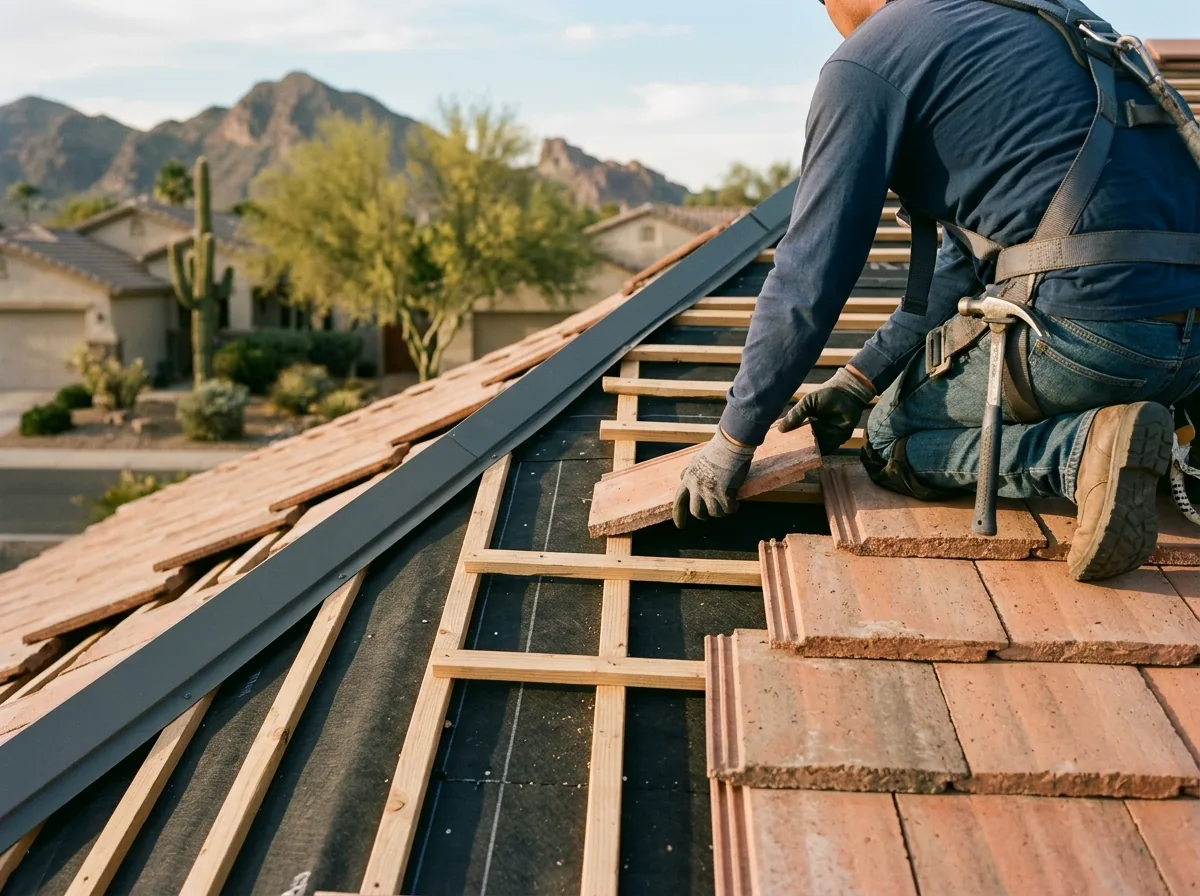
Tile Roof Replacement
Tile replacement goes down to the deck, then back up with new underlayment, battens, valley metal and tile. The code allows clay and concrete tile on slopes of 2½:12 or steeper, and between 2½:12 and 4:12 it requires two layers of underlayment. Valley flashing has to be at least No. 26 gauge corrosion-resistant metal and extend 11 inches each way from the centerline. If the existing tile is sound, another route may fit: an underlayment replacement that relays your tile.
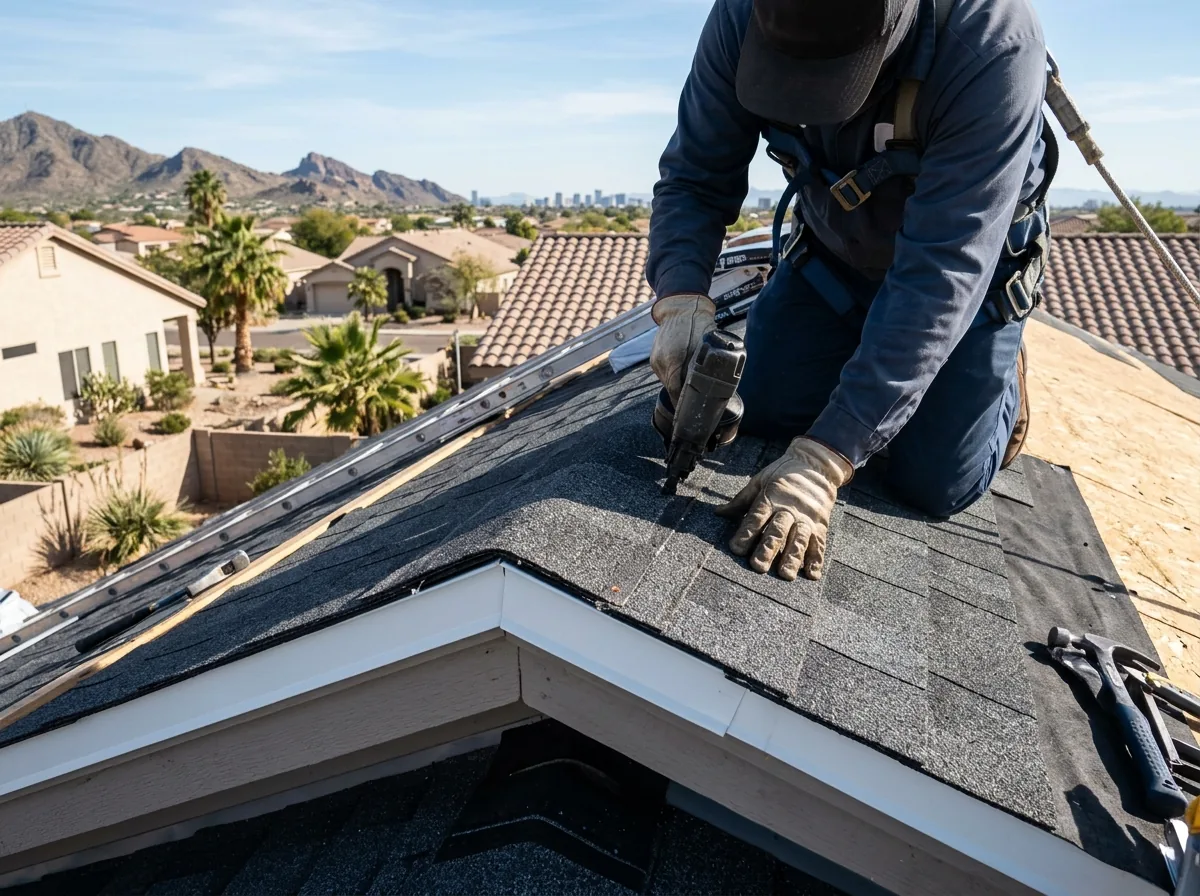
Shingle Roof Replacement
A shingle replacement installs drip edge at the eaves and rakes, underlayment (two layers on slopes from 2:12 to 4:12), valley linings, step flashing at sidewalls and shingles that meet ASTM D3462. Drip edge has to extend at least ¼ inch below the sheathing and 2 inches up the deck, and the underlayment laps over it at the eaves and under it at the rakes. See shingle roofing.
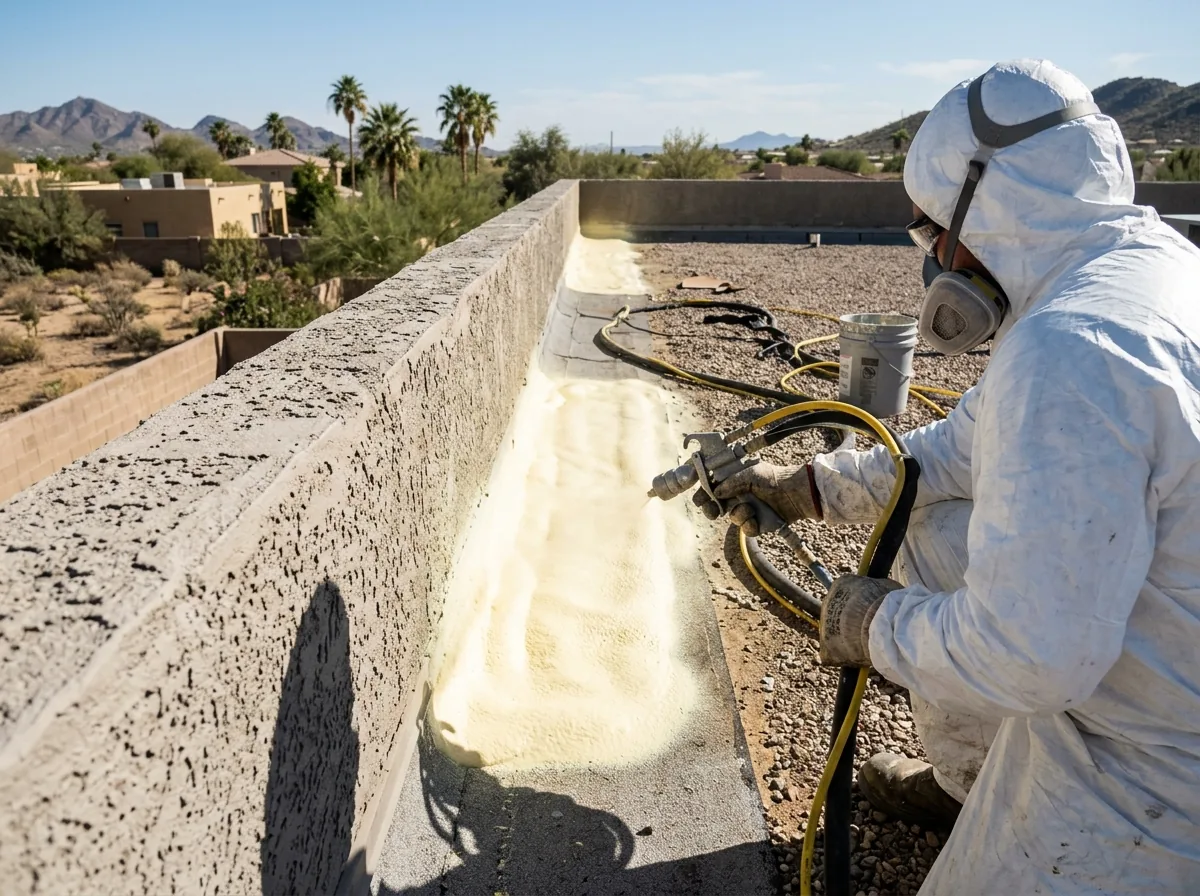
Foam and Flat Roof Replacement
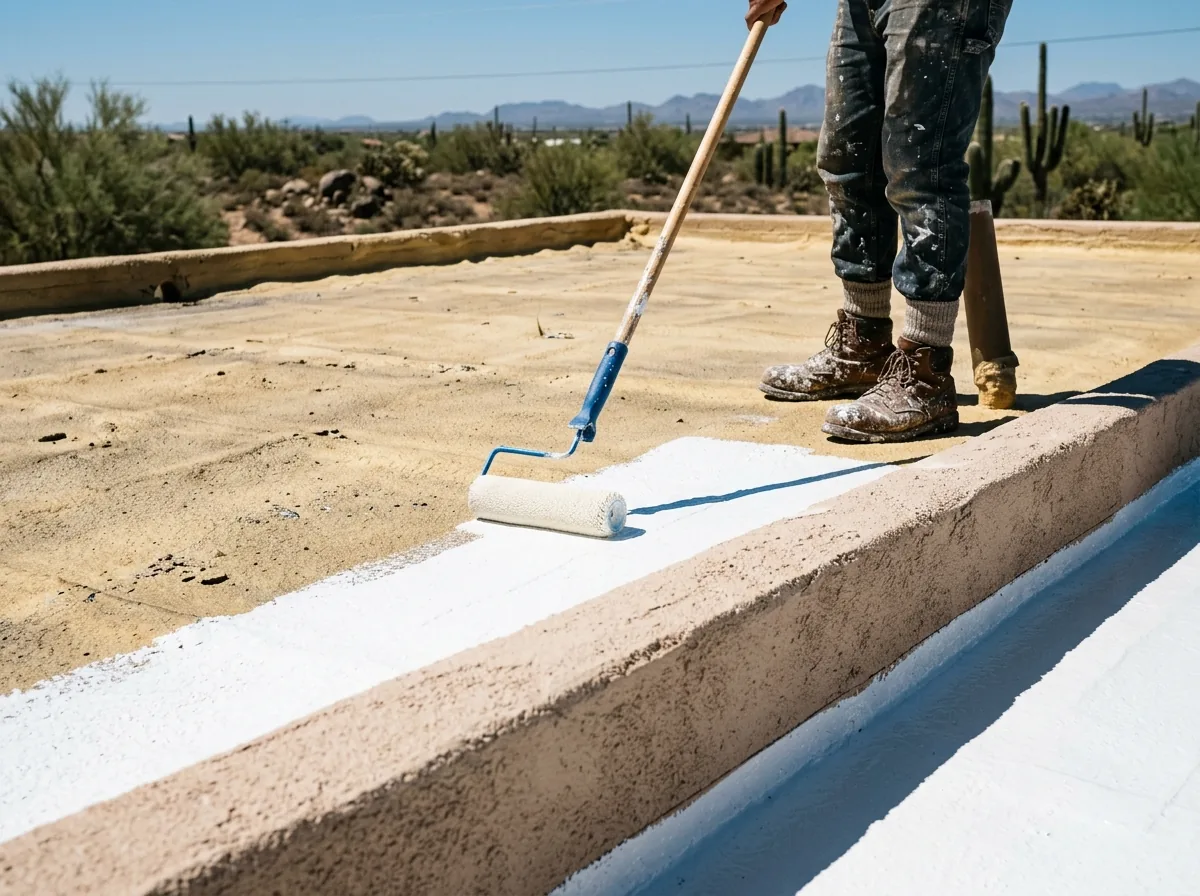
Flat roofs are replaced with spray polyurethane foam, modified bitumen, built-up roofing or a TPO single-ply membrane. Each needs a design slope of at least ¼ inch per foot for drainage, though a reroof can keep an existing slope that drains positively. New foam gets its protective coating within 2 to 72 hours of spraying. More on foam roofing and flat roof repair.
Changing Roof Materials
Going from shingle to tile, or tile to something else, changes what the roof weighs and how it drains. Tempe's permit exemption covers a replacement covering only when its classification is equal to or better than the old one and it doesn't add load beyond the framing's design capacity, so a change of material is where a permit and a structural check come in.
Why Tempe homeowners call Tempe Expert Roofing
- Free, no-obligation roof estimates
- Written scope: tear-off, underlayment, flashing, coating
- Photos of every finding on your roof
- Permit and code questions answered up front
- One call, one local roofer
What Happens During a Roof Replacement
- 1
Tear-off
Every existing layer comes off down to the deck. Sound tile can be stacked and reused. Broken tile can't go back on. - 2
Deck repair
Soft or delaminated sheathing gets replaced. This is the part nobody can price exactly until the old roof is off, so ask how it's charged per sheet. - 3
Underlayment and edges
Drip edge, underlayment in the layers the slope requires, and valley linings. - 4
Flashing
New flashing at every wall, change of slope and opening. Rusted or damaged flashings, vents and edgings are replaced, not reused. - 5
The new covering
Tile, shingles, foam and coating, or membrane, installed to the manufacturer's instructions. - 6
Cleanup and walk-through
Debris and nails cleared, and the roofer walks the job with you.
How to Compare Roof Replacement Quotes
Two quotes for the same roof can differ a lot because they describe different jobs. Line them up item by item:
Tear-off
How many layers come off, and how the debris is hauled away.Deck repair
The price per sheet of sheathing, since nobody knows how much is needed until the roof is open.Underlayment
The product, its ASTM standard, and one layer or two.Flashing
New at every wall, valley, pipe and skylight, or reused. The code requires rusted or damaged flashing to be replaced.Drip edge and edges
on shingle roofs, and valley metal on tile.Tile
Reused, new, or a mix, and how broken tiles are replaced.Permit
Whether one applies and who pulls it.Paperwork
The manufacturer's product documents and any workmanship terms the roofer offers, in writing.
A quote that leaves several of these out isn't cheaper. It just hasn't told you what it includes.
Permits and Codes for a Tempe Reroof
Tempe adopted the 2024 International Codes effective July 1, 2026. Through December 31, 2026, a permit application may use either the 2018 or the 2024 codes. From January 1, 2027, it must use the 2024 codes. Whether your replacement needs a permit at all depends on the covering and the load, as above. Replacing sheathing always needs one.
Before you sign, look up the roofer's Arizona Registrar of Contractors license. Residential roofing needs R-42 or CR-42.