
Tile Roof Repair Services
Tile repair covers the problems that don't need the whole roof lifted. Each type below starts with finding the exact tile or joint that failed.
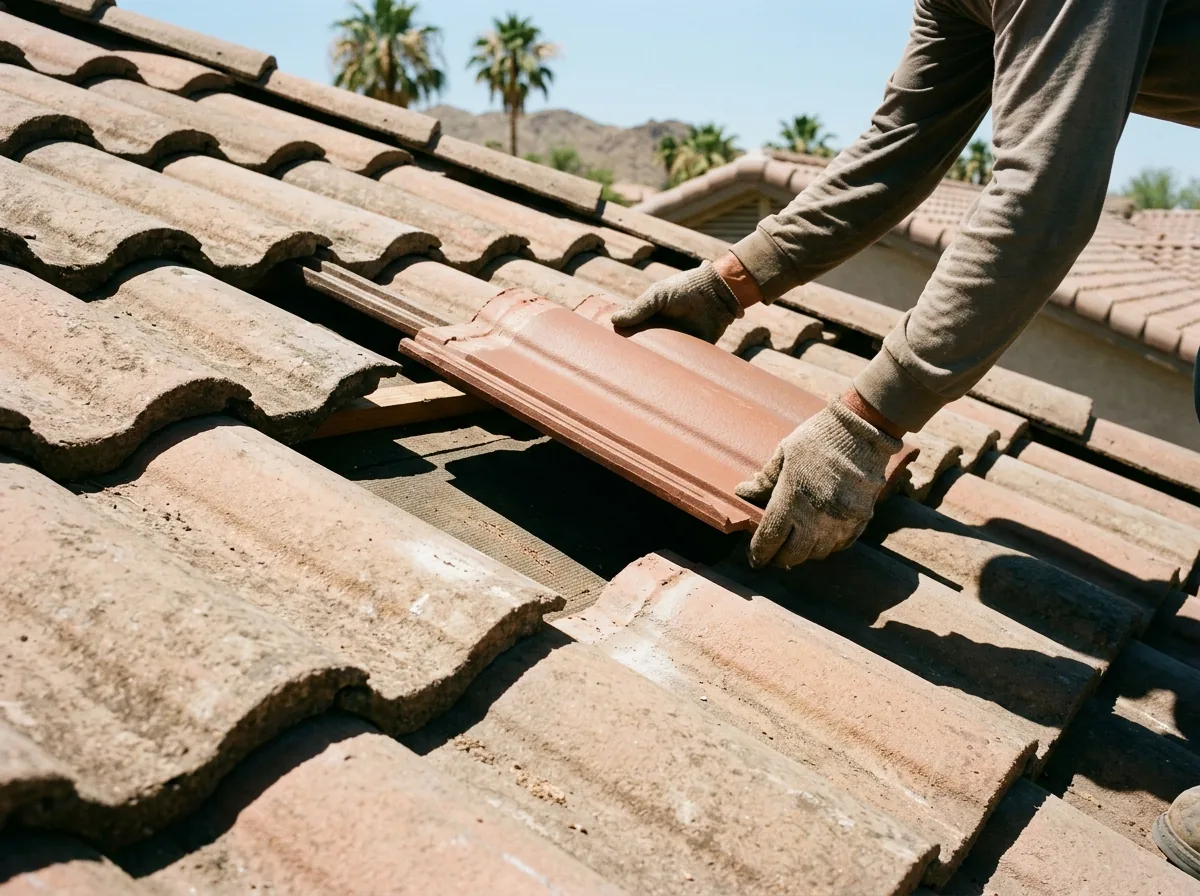
Cracked and Slipped Tile Replacement
Cracked tile lets water and sun reach the underlayment, and a slipped tile leaves a gap in the course. The roofer replaces broken tiles with matching ones and resets slipped tiles, fastening where the code and the manufacturer require it. Walking on a tile roof can crack more tile, so ask how the crew moves around the roof.
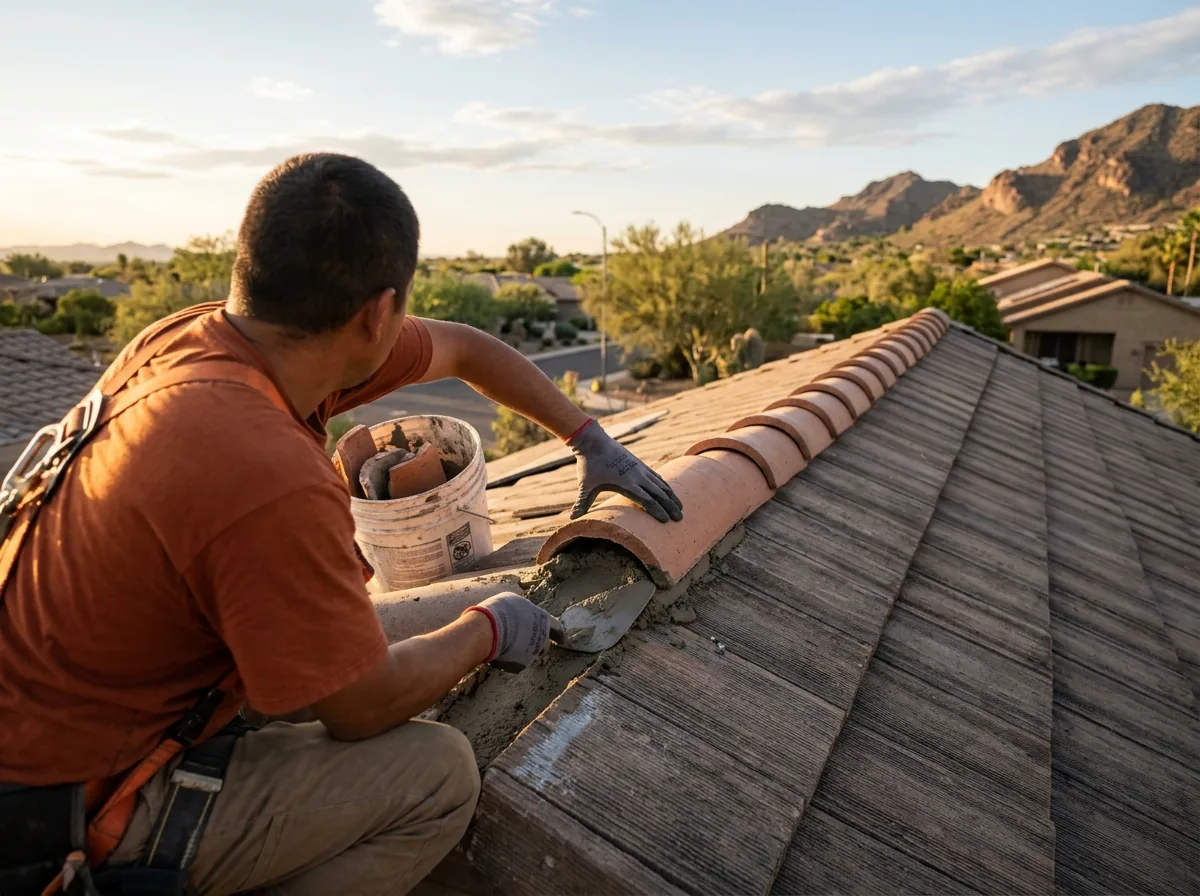
Hip and Ridge Tile Repair
Hip and ridge tiles cap the joints where roof planes meet. Loose caps and cracked mortar or failed ridge fasteners open the top of the roof to wind-driven rain. Repair resets or replaces the caps and redoes the attachment beneath them.
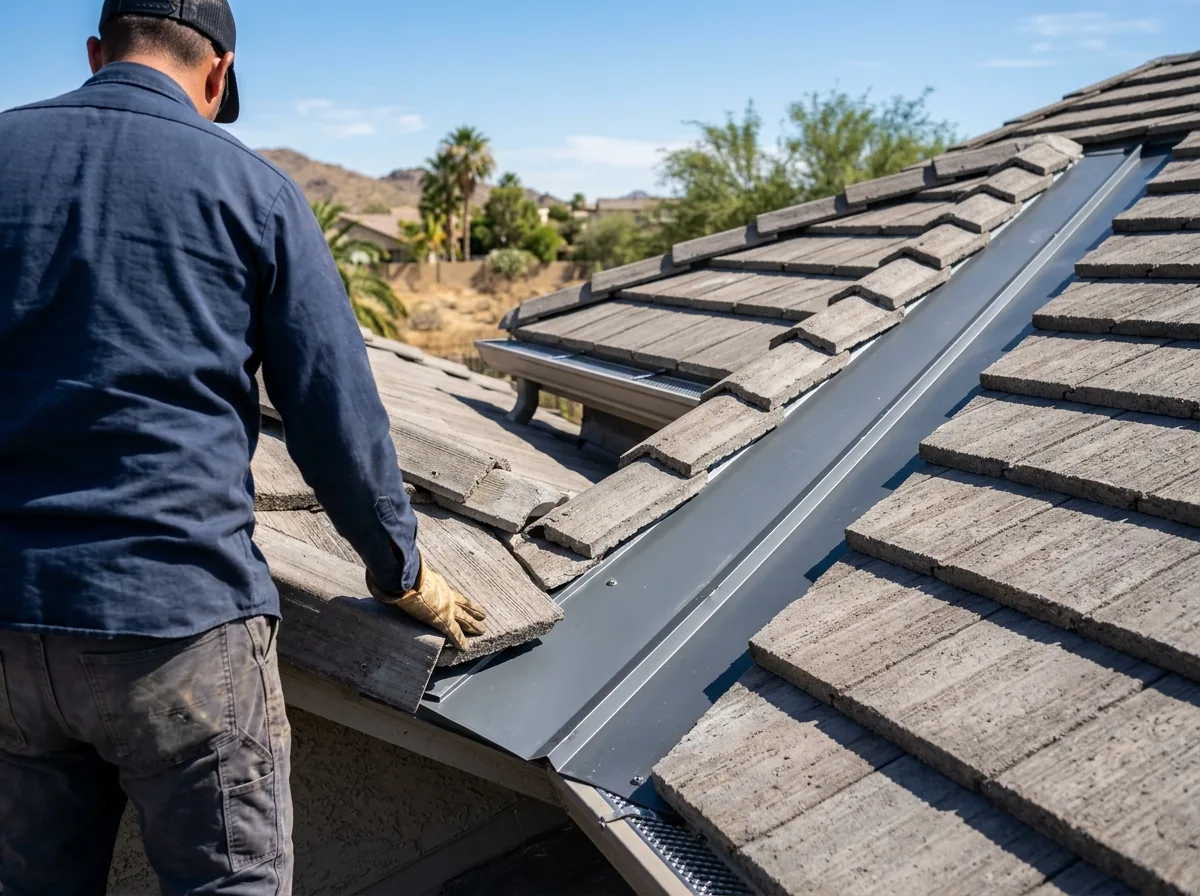
Valley Flashing Repair
Valleys carry the most water on a tile roof. The code calls for valley flashing of at least No. 26 gauge corrosion-resistant metal, extending at least 11 inches each way from the centerline, with a splash diverter rib at least 1 inch high and end laps of at least 4 inches. Rusted or undersized valley metal, or a valley packed with debris, lets water over the edge of the flashing and under the tile.
Tile Around Vents, Pipes and Skylights
The code requires flashing around every roof opening and at every wall, and flashing plus counterflashing where tile meets a vertical surface, in No. 26 gauge metal or heavier. Repairs replace pipe flashings, reseal vent jacks, and redo the flashing around skylights and chimneys. A penetration wider than 30 inches needs a cricket on its uphill side.
Why Tempe homeowners call Tempe Expert Roofing
- Free, no-obligation roof estimates
- Written scope: tear-off, underlayment, flashing, coating
- Photos of every finding on your roof
- Permit and code questions answered up front
- One call, one local roofer
Questions to Ask Before a Tile Repair
- How will you match my tile, and what happens if the profile is discontinued?
- How will the crew move on the roof without cracking more tile?
- Will you photograph the underlayment wherever tiles come off?
- Is the flashing around the leak included, or only the tiles?
- Which fasteners will the replacement tiles get, and does the manufacturer's installation guide call for more than the code?
- If you find failing underlayment, will you stop and show me before doing more?
A roofer who answers these in writing is easier to hold to the scope.
Matching Concrete and Clay Tile
A repair only looks right when the new tile matches. The roofer needs the material (concrete or clay), the profile (S-shaped or flat), and the color and texture. When a profile is discontinued, one option is to take matching tiles from a less visible part of the roof for the repair and put the closest available tile there. Ask before the work starts how your repair will be matched.
When Tile Repair Turns Into Underlayment Work
If lifting the broken tiles shows cracked or crumbling underlayment, more tile repair won't stop the leaks, because the waterproof layer underneath is failing. The next step is a tile roof underlayment replacement, which relays your sound tile over new underlayment. Ask for photos of the underlayment wherever tiles come off, so you can see its condition yourself.
For other roof types, see roof repair.